Quick answer:
If your 11-week-old puppy is trying to eat rocks, sticks, grass, or anything they can find outside, this is less about “bad behavior” and more about age, impulse control, and opportunity. At The Puppy Academy, we see this most often in very young puppies who don’t yet have the skills to disengage from their environment. The solution is prevention first, paired with calm leash foundations and impulse-control training as your puppy matures.
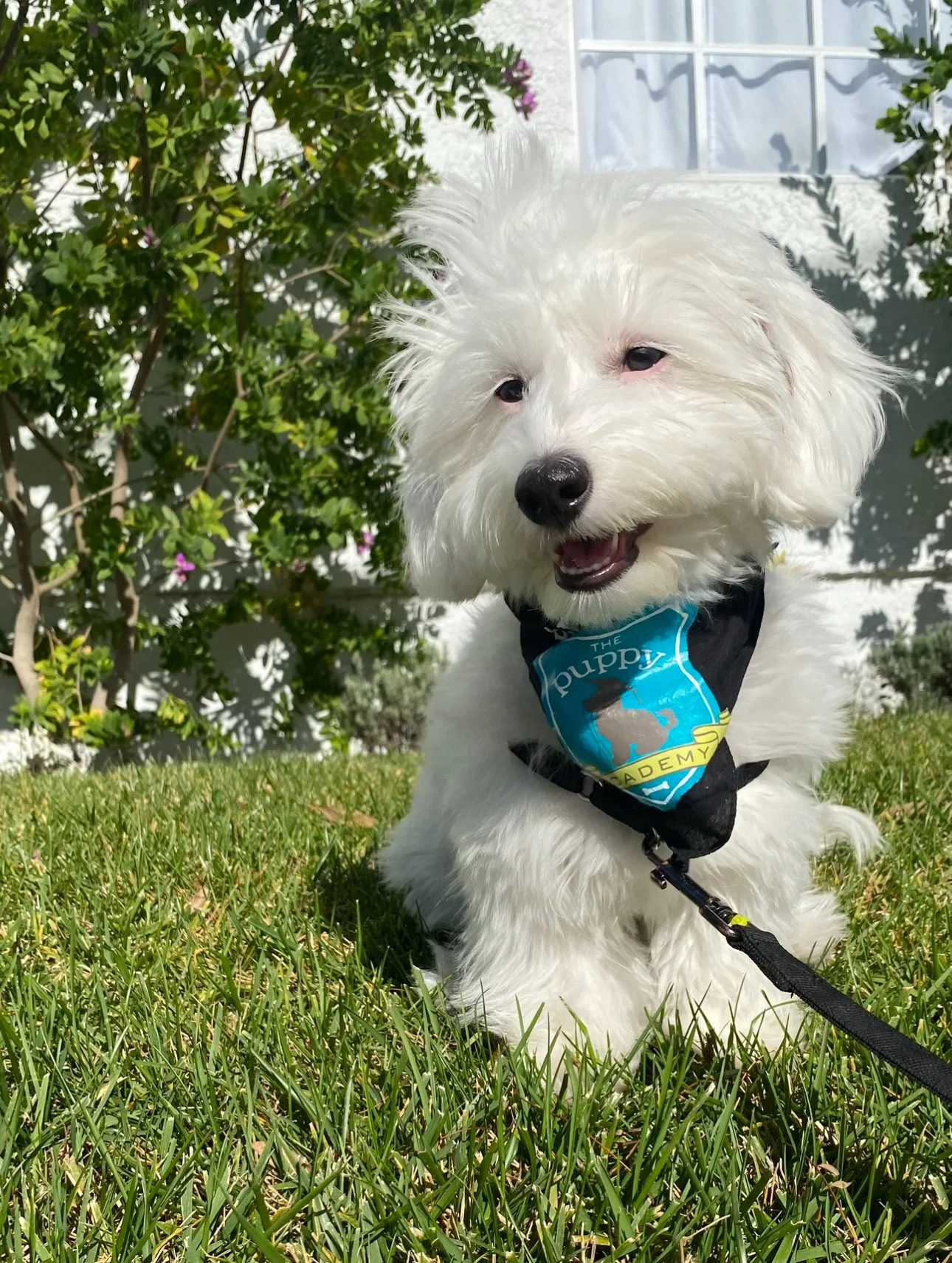
The Puppy Academy student: Snowflake!
Why puppies this young eat everything
At 11 weeks old, puppies:
have almost no impulse control
explore the world with their mouths
react instinctively to movement, texture, and novelty
They are not reasoning, testing boundaries, or being defiant — they’re simply responding to genetics and environment.
Trainer perspective:
This stage is very similar to a toddler under two years old. Their reasoning skills aren’t online yet, so repeated “no,” pulling things out of their mouth, or constant correction only creates frustration for everyone.
Why this matters more than people realize
Rock-eating isn’t just annoying — it can become dangerous if it turns into:
obsessive scavenging
guarding objects
GI blockages
emergency surgery
That’s why the goal early on isn’t “train it out,” but stop your puppy from practicing the behavior at all.
Step one: prevention beats training at this age
Before jumping into commands, look at your setup.
Puppy-proof the outdoor space
If your puppy has access to:
rock gardens
gravel
landscaping stones
…they will go for them.
We strongly recommend:
keeping your puppy on leash for potty breaks
avoiding high-risk areas altogether
creating a designated safe potty zone
If needed, temporary solutions work great:
placing fencing around rock areas
using playpens outdoors
laying down temporary turf over rocks
This is not “giving up” — it’s smart management while your puppy’s brain develops.
Don’t rely on “leave it” yet
At 11 weeks old, most puppies:
don’t understand “leave it”
don’t have the impulse control to follow it
will grab first and think later
Trying to train “leave it” without a foundation often turns into a constant game of tug-of-war — which actually makes the behavior worse.
Build the foundation indoors first
Instead of correcting outside chaos, focus on what you can control.
What to work on inside:
leash walking basics
“let’s go” and “come”
food motivation
attention around mild distractions
This teaches your puppy:
“When I hear my person, good things happen.”
That relationship becomes your strongest tool later.
How to handle objects safely (right now)
Not everything needs to be a battle.
Leaves? Usually fine.
Small sticks? Use discretion.
Rocks, gravel, mulch? Prevent access.
If your puppy does grab something unsafe:
stay calm
use your leash to guide them away
redirect with food before they lock in
Avoid:
chasing
panicking
repeatedly pulling items from their mouth
That often creates guarding behaviors down the road.
When training tools come into play
As your puppy gets older (around 5–7 months), you can layer in:
more structured leash work
clearer boundaries
tools that give you head control
well-timed interrupters (used correctly)
But those only work after the foundation is built.
Why age matters so much here
Trying to “train away” rock-eating at 11 weeks is like trying to reason with a toddler.
Instead:
manage the environment now
build impulse control gradually
reduce frustration for both of you
This approach leads to faster results long-term, not slower ones.
Frequently Asked Questions
Is my puppy deficient in nutrients?
Usually no. In puppies this young, rock-eating is almost always exploratory, not nutritional.
Should I punish my puppy for eating rocks?
No. Punishment increases stress and can lead to guarding or anxiety.
When does this behavior usually improve?
With proper management and training, most puppies improve significantly by 5–6 months as impulse control develops.
Want a clear plan instead of guessing?
At The Puppy Academy, our Online School walks you through leash foundations, impulse control, puppy proofing, and age-appropriate training — so you know exactly what to focus on and when. You’ll also get weekly live Q&A support to troubleshoot behaviors like scavenging before they become habits. Enroll here and get started now!
This question originally came up on our Ask A Puppy Trainer podcast, where our trainers discuss age-specific puppy behavior in more depth. You can listen to the full episode here → on Apple Podcasts or on Spotify.
Have more questions about your puppy? Ask our trainers LIVE every Wednesday at 1 pm PT on our Instagram @thepuppyacademy during our Ask A Puppy Trainer Show! All replays are posted afterward, and you can catch up on our last ones on our YouTube channel or Podcast.
Become a Puppy Academy VIP (Very Important Puppy) to get our latest puppy training tips direct to your inbox, for free, each week!
This article is part of our Puppy Behavior Basics series.
Next recommended reads