
The Hidden Reason Your Puppy Won't Calm Down
One of the most common frustrations puppy parents face is feeling like they're doing everything right—training, playing, exercising their puppy—and somehow their puppy seems to be getting more hyper instead of less.
If your puppy is jumping, barking, nipping, zooming around the house, or acting completely out of control after activity, this may be why…
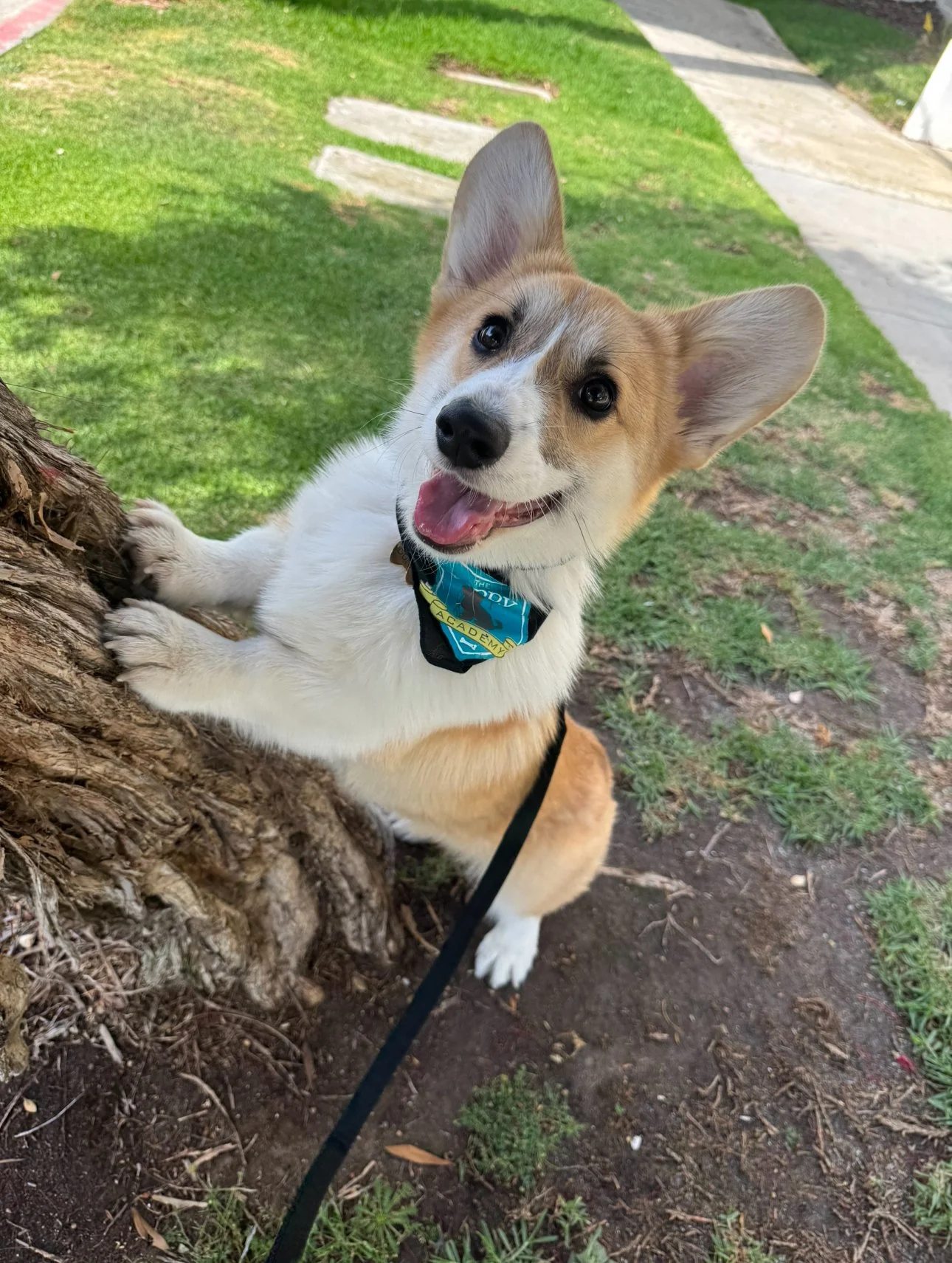
The Puppy Academy student, Boromir!
Quick Answer:
At The Puppy Academy, we often find that puppies who seem "too hyper" aren't necessarily under-exercised—they're often overstimulated and under-practiced at being calm.
Many puppy parents focus heavily on play and training but accidentally skip one of the most important puppy skills:
Learning how to simply exist calmly in the world.
If your puppy is constantly bouncing from one activity to the next, they may need more structure, more rest, and more opportunities to practice calm behavior—not more excitement.
And surprisingly, the answer usually isn't more exercise.
Recently on our Ask A Puppy Trainer Show, we received a question from a puppy parent with a 14-week-old puppy who was getting regular naps, playtime, training sessions, and plenty of interaction—but was still struggling with jumping, barking, and nipping…
The Goal Isn't a Tired Puppy
A lot of people believe that if their puppy is acting wild, they simply need more exercise.
So they:
Play more fetch
Take longer walks
Do more intense training sessions
Increase activity throughout the day
But sometimes this creates the opposite result.
For many puppies, especially confident, social, or high-energy breeds, constant stimulation and over-exercising creates an athlete with crazy endurance—not a calm companion.
Instead of teaching the puppy how to settle, we're teaching them that life should always be exciting.
The Puppy Academy Activity Window
One way to counteract this is by helping puppies understand what to expect when they come out of the crate.
Rather than random activity, we like puppies to experience a predictable rhythm:
1. Potty
First things first.
2. Work
A few minutes of structured training, engagement, leash work, recalls, or relationship-building exercises.
3. Play
Tug, fetch, toys, exploration, and appropriate puppy fun.
4. Calm Time
This is the piece many puppy parents accidentally skip.
Your puppy needs opportunities to practice:
Settling beside you
Relaxing on leash
Hanging out without entertainment
Existing calmly in the environment
Calmness is a skill. And like every other skill, it must be practiced.
5. Rest
Then it's time to recharge. Puppies need a tremendous amount of sleep.
Many behavior issues improve dramatically when puppies are getting appropriate rest throughout the day. And most puppies don’t self-regulate. Which is why we use a crate schedule and guide them into their crate to indicate when it’s time for them rest.
Excitement Isn't Always Helpful
Some puppies become more aroused when we become highly animated during training.
While enthusiasm can absolutely be useful in certain situations and with particular temperamnets., some puppies already come into the world with plenty of excitement.
For these puppies, adding even more energy can accidentally create:
More jumping
More barking
More nipping
More frantic behavior
Sometimes the best thing we can do is become a little calmer ourselves.
Instead of:
"OH MY GOODNESS! GOOD PUPPY!! YESSSS!!"
Try:
"Good." Reward. Move on. (Very matter-of-fact, business-like.)
For many puppies, calm interactions helps create calm behavior.
Why Your Puppy Seems Fine…Until They're Not
Many puppy parents notice a pattern:
Their puppy starts off behaving well. Then suddenly:
Starts biting
Starts jumping
Gets zoomies
Can't focus
Seems completely out of control
Often this isn't stubbornness. It's overstimulation.
Your puppy is essentially telling you:
"My brain is done."
At that point, adding more activity usually makes things worse. What they often need is structure, decompression, and rest.
Don't Forget the Leash
Keeping a leash attached during supervised activity windows is extremely helpful.
At The Puppy Academy, we recommend pup parents use a lightweight leash indoors because it helps to:
Guide puppies calmly
Prevent unwanted behaviors
Create structure
Redirect without chasing
Give them leverage!
Instead of allowing a puppy to rehearse wild behavior, the leash gives us a simple way to help them make better choices (and stay out of trouble).
What To Do This Week
If your puppy seems overly hyper, try this:
Keep your daily structure consistent.
Balance training, play, and rest.
Add intentional calm-time practice.
Avoid constantly entertaining your puppy.
Watch for signs of overstimulation.
Focus on teaching calmness—not just burning energy.
You may be surprised how quickly things improve!
Need Help Raising a Calm, Well-Behaved Puppy?
The Puppy Academy Online School was created specifically for first-time puppy parents who want a clear plan for navigating puppyhood.
Inside you'll find:
✅ Step-by-step puppy training lessons
✅ Help with biting, crate training, potty training, and more
✅ Weekly live coaching with our Master Trainers
✅ A supportive puppy-parent community
✅ Training guidance from the comfort of home
And we’re with you every step of the way as your puppy grows, for an entire year. Tackling each puppy stage with you.
Final Thoughts
One of the biggest mindset shifts for new puppy parents is realizing that raising a great dog isn't just about teaching commands.
It's also about teaching:
Patience
Self-control
Relaxation
Emotional regulation
At The Puppy Academy, we want puppies to learn more than obedience. We want them to learn how to peacefully exist in the human world. And sometimes that starts by doing a little less—and teaching a little more calm.
This question originally came up on our Ask A Puppy Trainer podcast, where our trainers discuss age-specific puppy behavior in more depth. You can listen to the full episode here → on Apple Podcasts or on Spotify.
Have more questions about your puppy? Ask our trainers LIVE every Wednesday at 1 pm PT on our Instagram @thepuppyacademy during our Ask A Puppy Trainer Show! All replays are posted afterward, and you can catch up on our last ones on our YouTube channel or Podcast.
Become a Puppy Academy VIP (Very Important Puppy) to get our latest puppy training tips direct to your inbox, for free, each week!
This article is part of our Puppy Behavior Basics series.
Related Puppy Training Help
You may also enjoy: