Quick answer:
If your puppy won’t pee or poop on walks, potty training needs to happen on leash, in one designated spot, on a consistent schedule. Give your puppy 2–3 minutes to potty, return them to the crate if they don’t go, and repeat until they do. Free time only comes after potty. This teaches your puppy that walks include bathroom time — not just sniffing and exploring.
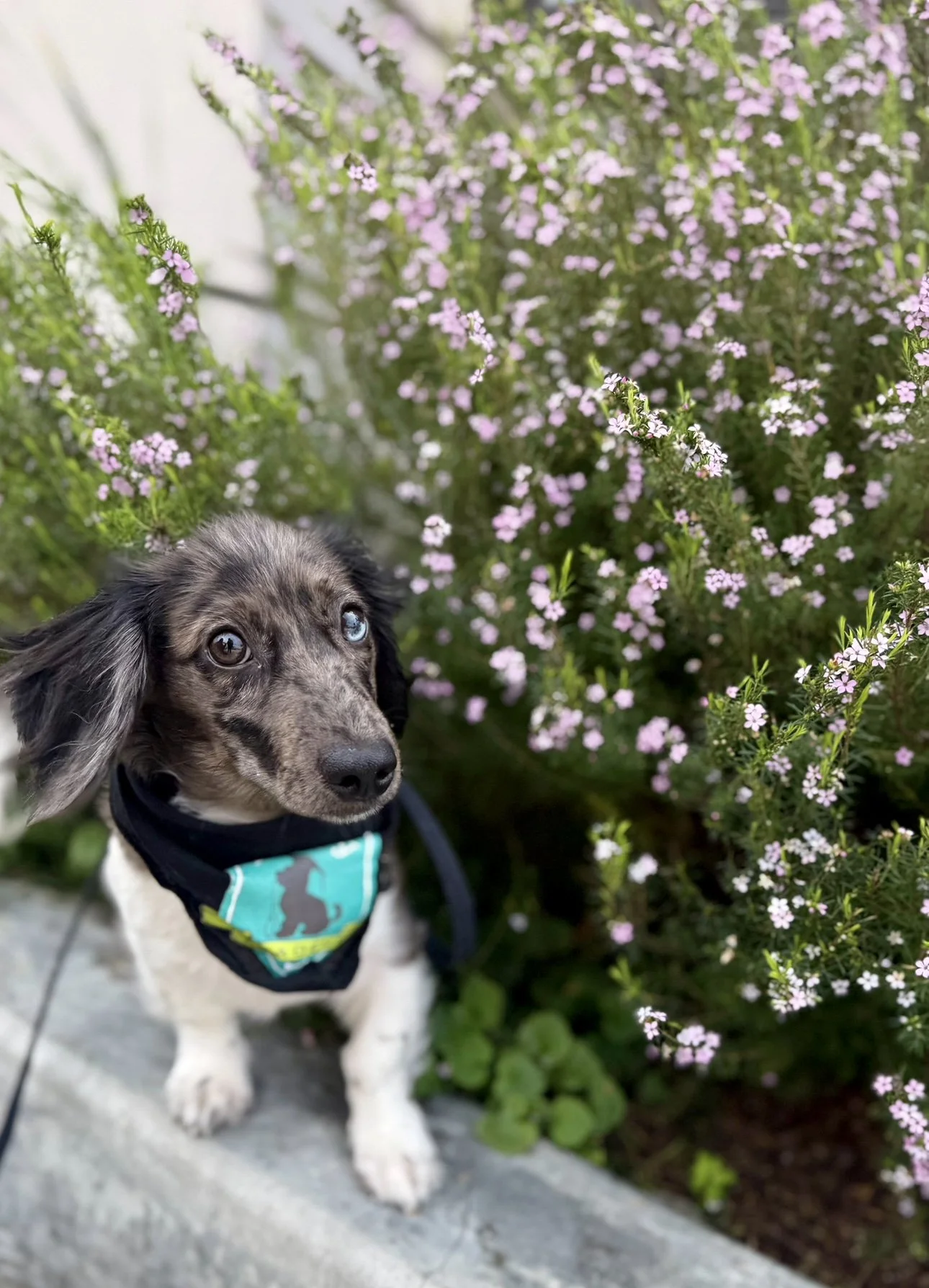
The Puppy Academy student, Cooper!
If your puppy happily goes potty in the backyard but suddenly forgets how the moment you head out on a walk, you’re not alone. This is one of the most common potty‑training frustrations we hear from new puppy parents — and it doesn’t mean anything is wrong with your puppy.
The good news? Puppies don’t magically learn to potty on walks — but they can be taught.
Below is a simple, structured approach we use with puppies of all breeds and ages to help them learn how to pee and poop while out on leash.
Why Puppies Don’t Automatically Potty on Walks
Many puppy parents assume dogs instinctively know to go potty outside, anywhere outside. In reality, puppies are very context‑specific learners.
If your puppy learned early on that:
The backyard is where potty happens
Freedom = play, sniffing, distractions
Then a walk feels like a totally different job. New smells, movement, people, dogs, noises — all of that can override the urge to go.
Pottying on walks is a skill, not an instinct.
Step 1: Potty on Leash — Every Time
If your puppy isn’t reliably pottying on walks yet, potty should always happen on leash.
Why?
Leash = clarity
Off‑leash = wandering, playing, distraction
Take your puppy to the specific area where you want them to potty — ideally a consistent grassy patch or public easement — and stay there.
Think: “This spot is the bathroom.”
Step 2: Stand Like a Tree (2–3 Minutes)
Once you reach the potty spot:
Plant your feet
Hold the leash
Let your puppy sniff left, right, forward, and back
But don’t walk around.
Give your puppy 2–3 minutes to figure it out. You’re calm, quiet, neutral — like a tree.
If your puppy starts obsessively eating grass or fixating on something, gently guide them a foot or two away without leaving the area.
Step 3: No Potty? Back to the Crate
If your puppy doesn’t go within those 2–3 minutes:
Calmly bring them back inside
Place them in the crate
Crate time depends on age:
Under 4 months: 5–10 minutes
Over 4 months: 10–30 minutes
Then repeat the potty attempt — same leash, same spot, same rules.
This teaches:
“Potty happens outside, not inside.”
Step 4: Add Movement If Needed
Sometimes puppies need movement to get things going — just like people.
If repeated potty attempts aren’t working:
Skip the crate once
Do a short training session or controlled walking
Then try potty again on leash
Movement can help stimulate the bowels, especially for poop.
Step 5: Free Time Is Earned After Potty
This part is critical.
If your puppy potties outside:
They earn free time, play, or relaxation
If they don’t:
They don’t get freedom yet
Potty becomes the gateway to everything fun.
Common Mistakes to Avoid
Avoiding these mistakes will help your puppy learn faster and with fewer accidents:
Letting puppies wander off‑leash before potty
Walking endlessly instead of stopping in one spot
Giving free time before potty happens
Expecting backyard potty habits to automatically transfer to walks
Be Patient — This Is a Learned Skill
Some puppies catch on quickly. Others need repetition.
Consistency matters more than speed.
Stick to:
Leash
Location
Timing
Follow‑through
And your puppy will learn.
Want Step‑by‑Step Support?
If potty training (or crate training, biting, jumping, or listening) feels overwhelming, having a structured plan makes all the difference.
Our Online Puppy School walks you step‑by‑step through puppy training foundations, schedules, and common behavior challenges — with weekly live Q&A support.
You don’t have to figure this out alone.
This question originally came up on our Ask a Puppy Trainer podcast, where our trainers discuss age-specific puppy behavior in more depth. You can listen to the full episode here → on Apple Podcasts or on Spotify.
Have more questions about your puppy? Ask our trainers LIVE every Wednesday at 1 pm PT on our Instagram @thepuppyacademy during our Ask A Puppy Trainer Show! All replays are posted afterward, and you can catch up on our last ones on our YouTube channel or Podcast.
Become a Puppy Academy VIP (Very Important Puppy) to get our latest puppy training tips direct to your inbox, for free, each week!
Related Puppy Training Help
If you’re working through potty training, these resources may also help: