Quick Answer
If your puppy barks while you’re cooking, it’s usually a sign of overstimulation and lack of boundaries, not just “bad behavior.” The fix is to meet your puppy’s needs before kitchen time, limit access to the kitchen, and use structured place or crate routines so your puppy learns how to settle instead of demand attention.
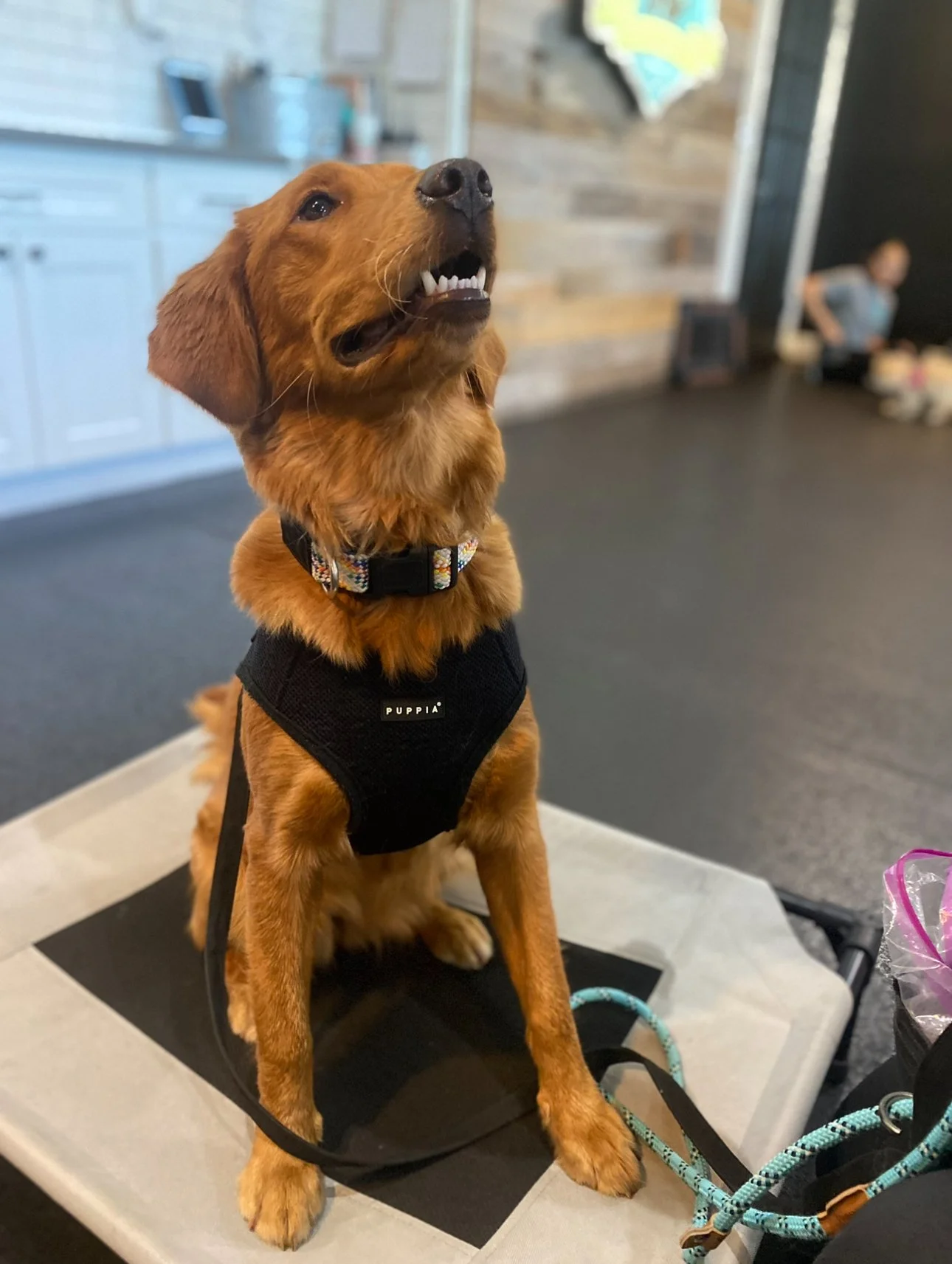
The Puppy Academy student, Trudy!
If you’ve ever tried to cook with a puppy at your feet, you know how quickly it can turn chaotic:
barking
jumping
weaving between your legs
trying to grab food
It can feel like your puppy is being needy or stubborn.
But in most cases, what’s really happening is much simpler.
Why Puppies Bark While You’re Cooking
Cooking time often combines multiple triggers for a young puppy:
movement (you walking around)
smells (food being prepared)
excitement (something “interesting” is happening)
lack of direction (no clear job or boundary)
All of that can push your puppy into an overstimulated state.
And when puppies are overstimulated, they don’t make good decisions.
They bark, jump, and seek attention — not because they’re being difficult, but because they don’t know what else to do.
The Real Problem: Too Much Freedom, Not Enough Structure
One of the biggest mistakes puppy parents make is allowing their puppy to be loose in the kitchen too early.
The kitchen is:
busy
stimulating
potentially dangerous
A young puppy who hasn’t learned how to settle is not ready to navigate that environment calmly.
Instead of learning to relax, they practice:
demand barking
following you everywhere
getting underfoot
And the more they practice it, the stronger the habit becomes.
Step 1: Meet Your Puppy’s Needs Before You Start Cooking
If your puppy has just woken up and has a full tank of energy, the kitchen is the worst place to expect calm behavior.
Before you cook, make sure you’ve checked these boxes:
Physical exercise (walk or play)
Mental stimulation (training, food work)
Short calm time (hanging out on leash or settling)
This is the same “activity window” concept:
Physical + Mental + Learning to Be Calm
When those needs are met, your puppy is much more capable of settling.
Step 2: Don’t Train in Chaos — Prevent It
Trying to fix barking while you’re actively cooking is difficult.
You’re distracted. Your puppy is overstimulated. Timing is off.
Instead, set your puppy up for success before the behavior starts.
That means:
using a crate
or using a designated spot (“Place” command - like a dog bed or pet cot)
or keeping your puppy out of the kitchen entirely
Prevention is more effective than reacting in the moment.
Step 3: Use the Crate When You Can’t Supervise
If you’re busy cooking and can’t actively train, the crate is your best tool.
The crate is not a punishment — it’s a way to:
keep your puppy safe
prevent rehearsal of bad habits
allow your puppy to settle and rest
A puppy who has already had a full activity window will often nap during this time.
Step 4: Build a Calm “Place” Behavior (When You Can Train)
When you do have time to practice, start teaching your puppy how to stay on a designated spot (aka “Place” command) while you move around.
Start small:
reheating food
grabbing something from the fridge
short kitchen visits
Guide your puppy to place, reward calm behavior, and reset as needed.
Over time, you can build duration and reliability.
Step 5: Add Boundaries Around the Kitchen
Not every space in your home needs to be free access.
You can:
create a boundary at the kitchen entrance
use a leash or back-tie for structure
block access entirely during busy times
Boundaries reduce confusion and help your puppy understand what’s expected.
Why Reacting Alone Doesn’t Work
Many owners try to:
say “no” repeatedly
push the puppy away
redirect in the moment
But if the puppy is already overstimulated, those responses often:
come too late
don’t address the root cause
create more frustration
Structure and timing will always be more effective than constant correction.
What Success Looks Like
Instead of chaos in the kitchen, your puppy learns:
how to settle
where to be
when to rest
Over time, cooking becomes just another calm part of the day — not an exciting event your puppy needs to react to.
Be Patient — This Is a Learned Skill
Most puppies are not naturally calm in busy environments.
They need to be taught:
how to regulate their energy
how to handle stimulation
how to relax when nothing is expected of them
With consistency, this behavior improves quickly.
Want a Step-by-Step Plan?
Our Online Puppy School was designed especially for first-time puppy parents, giving you a clear step-by-step plan for crate training, routines, and everyday puppy behavior — like while you’re cooking!— plus weekly live Q&A support so you're never guessing what to do next.
You don’t have to figure puppyhood out on your own.
This question originally came up on our Ask A Puppy Trainer podcast, where our trainers discuss age-specific puppy behavior in more depth. You can listen to the full episode here → on Apple Podcasts or on Spotify.
Have more questions about your puppy? Ask our trainers LIVE every Wednesday at 1 pm PT on our Instagram @thepuppyacademy during our Ask A Puppy Trainer Show! All replays are posted afterward, and you can catch up on our last ones on our YouTube channel or Podcast.
Become a Puppy Academy VIP (Very Important Puppy) to get our latest puppy training tips direct to your inbox, for free, each week!
This article is part of our Puppy Behavior Basics series.
Related Puppy Training Help
If you’re working on calm behavior and structure, these may also help: