Quick Answer:
If your puppy jumps on people, it’s usually because they’re overexcited, too close to the distraction, and haven’t been taught what to do instead. The fix is to use distance, repetition, and structure — not constant greetings. Teach your puppy to stay calm around people first, and only allow greetings in a controlled way.
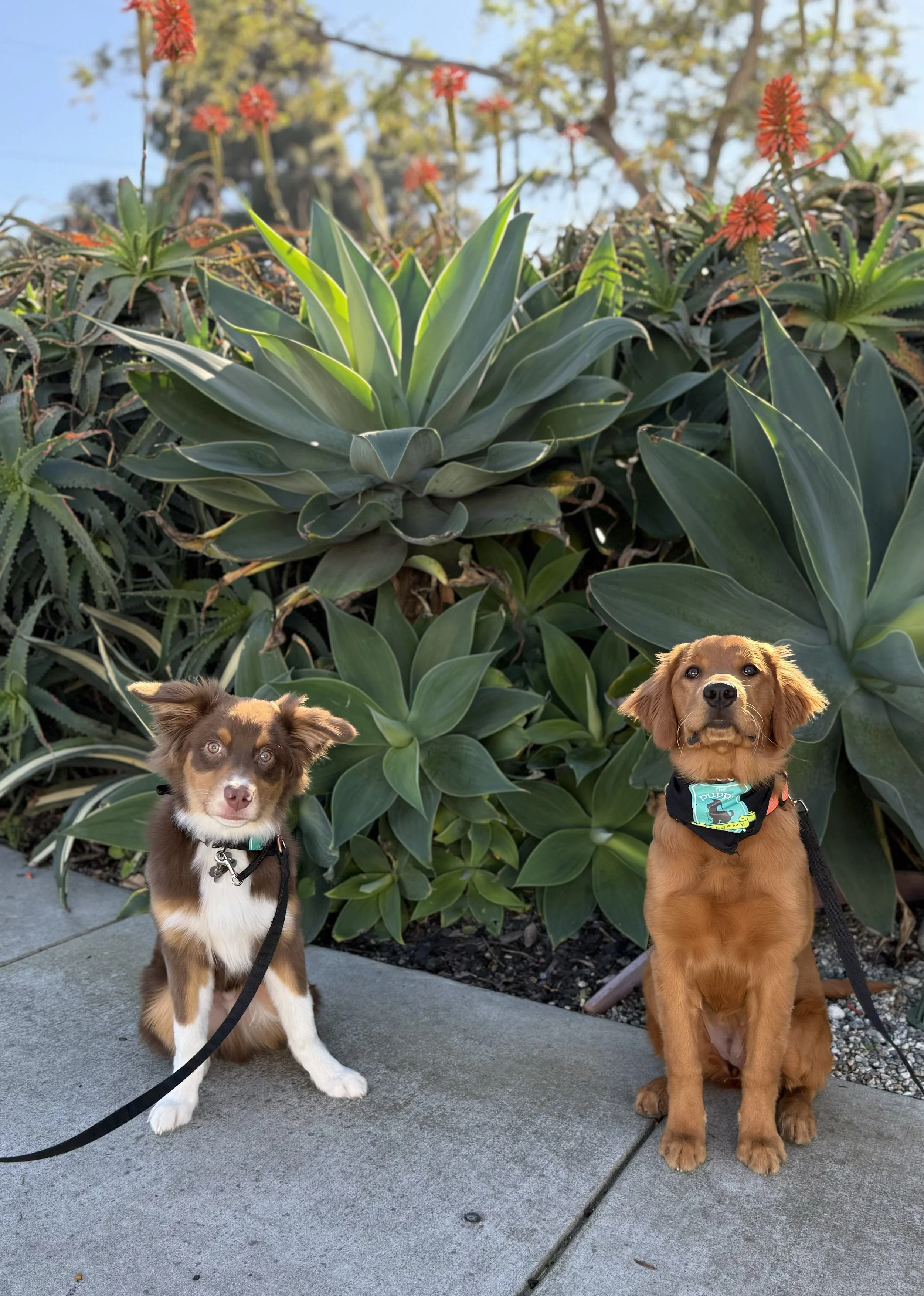
The Puppy Academy students, Jasper & Papaya!
You’re on a walk…
Someone approaches.
Your puppy gets excited, pulls forward, maybe jumps — and suddenly the whole interaction feels chaotic.
This is one of the most common things we see with puppies at our school — especially around 4–5 months when they’re social, curious, and easily overstimulated.
The mistake most people make?
Letting their puppy say hi to everyone.
Why Puppies Jump on People
Puppies don’t jump because they’re “bad.” They’re:
excited
social
too close to stimulation
not yet taught how to be calm in those moments
When every person becomes an opportunity to say hi, your puppy learns:
“People = excitement + interaction”
So when they see someone, they surge forward.
Step 1: Stop Letting Your Puppy Greet Everyone
This is the biggest shift.
At The Puppy Academy, we don’t teach puppies to say hi to everyone.
We teach them:
How to stay calm around people first.
That means:
most people = no greeting
your puppy stays with you
you control when interaction happens
This alone starts to lower excitement levels quickly.
Step 2: Use Distance to Stay Under Threshold
If your puppy can’t focus, you’re too close.
Instead of trying to control behavior right next to distractions:
move farther away
find a distance where your puppy can still respond to you
If it doesn’t work, go 10 feet back… then another 10 feet if needed.
Distance allows your puppy to:
think
respond
learn
Step 3: Use a Long Lead + Repetition (Instead of Forcing Greetings)
Instead of walking your puppy straight up to people, use a long lead (around 10–20 feet) and practice:
letting your puppy move away
calling them back
rewarding with food
Repeat this over and over.
You’re building a pattern:
“Distractions exist… but coming back to you is more valuable.”
In just 10–15 minutes, you can get dozens of repetitions.
That’s how learning happens and good patterns stick.
Step 4: Practice Calm Observation (This Is Huge)
Your puppy needs to learn how to observe without engaging
You can do this by:
sitting on a bench or picnic table
using a raised surface (pet cot if you have one)
keeping your puppy in one spot
Then:
reward calm behavior
mark pauses
give food when people pass by
You’re teaching:
“People walking by = stay calm, not interact.”
Step 5: Only Allow Greetings When You’re in Control
If you do allow a greeting:
keep it brief
expect some excitement (they’re still a puppy)
recall your puppy back quickly
You’re not trying to eliminate excitement overnight — you’re shaping it.
What Most People Get Wrong
letting puppies greet everyone
working too close to distractions
not doing enough repetitions
expecting calm behavior without teaching it first
petting when the puppy jumps on them (this rewards the behavior!)
What Success Looks Like
Over time, your puppy learns:
not every person is for them
staying with you is rewarding
calm behavior is the default
Instead of pulling and jumping, they start to:
- check in with you
- stay more neutral
- respond more consistently
Be Patient — This Is a Skill
Calm greetings don’t happen automatically.
They’re built through:
structure
repetition
and clear expectations
The more consistent you are, the faster your puppy learns.
Want a Step-by-Step Plan?
At The Puppy Academy, we focus on building calm, structured behavior from the start — not just reacting to problems as they come up.
Our Online Puppy School was designed especially for first-time puppy parents, giving you a clear, step-by-step plan for things like greetings, leash work, and real-world behavior — plus weekly live Q&A support so you’re never guessing what to do next.
We’ve got you every step of the way!
This question originally came up on our Ask A Puppy Trainer podcast, where our trainers discuss age-specific puppy behavior in more depth. You can listen to the full episode here → on Apple Podcasts or on Spotify.
Have more questions about your puppy? Ask our trainers LIVE every Wednesday at 1 pm PT on our Instagram @thepuppyacademy during our Ask A Puppy Trainer Show! All replays are posted afterward, and you can catch up on our last ones on our YouTube channel or Podcast.
Become a Puppy Academy VIP (Very Important Puppy) to get our latest puppy training tips direct to your inbox, for free, each week!
This article is part of our Puppy Behavior Basics series.
Related Puppy Training Help