Quick Answer:
At 12 weeks old, your puppy does not need to know advanced obedience.
What matters most right now is:
structure
engagement
calm behavior
routines
and learning how to learn
This stage is less about creating a “perfectly trained puppy”…and more about building the foundation for how your puppy will grow into the dog they are in the future.
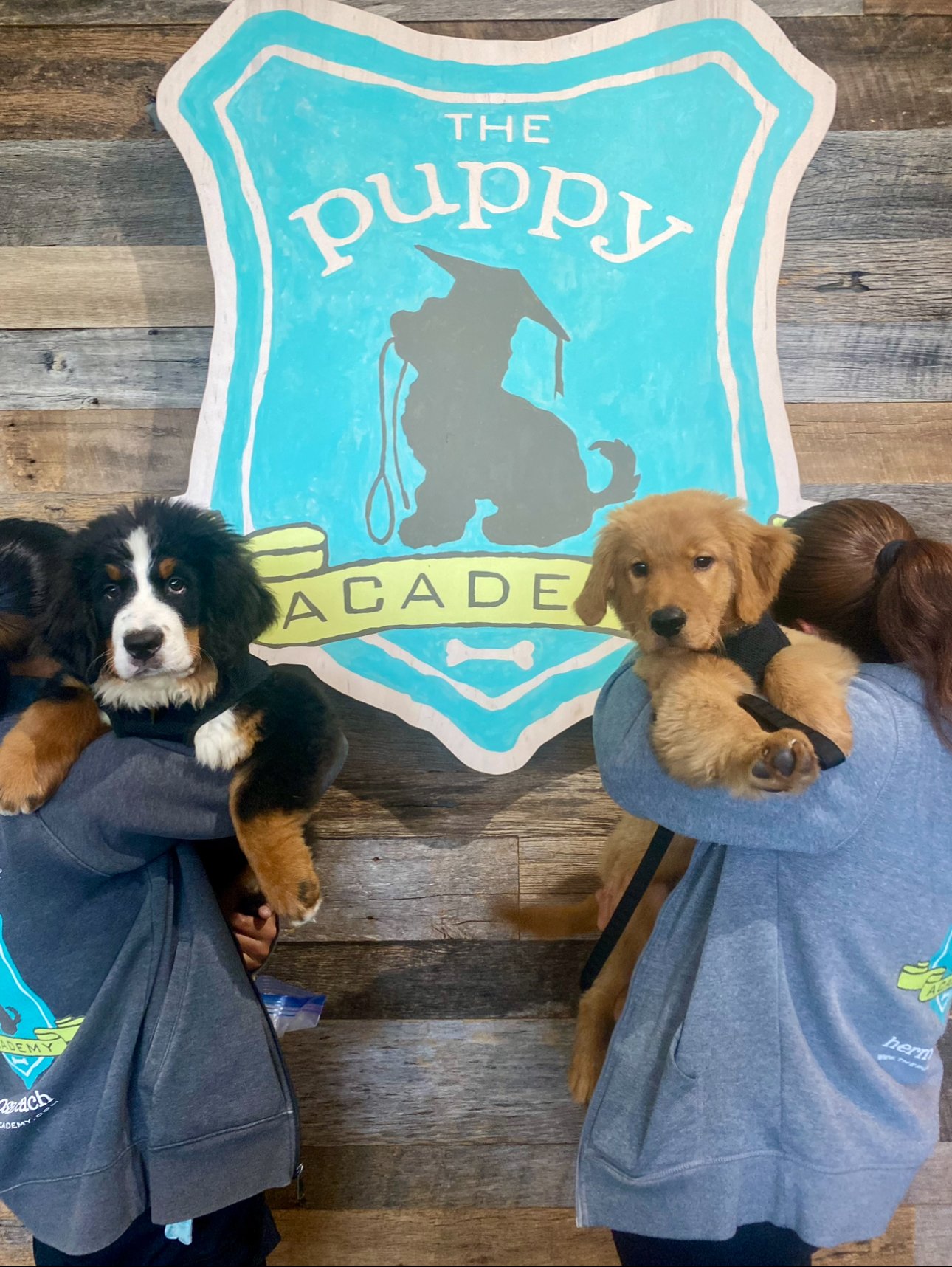
The Puppy Academy students: Lola & Tuddy!
The Biggest Mistake Puppy Parents Make at 12 Weeks
Most new puppy owners focus almost entirely on commands:
Sit
Down
Stay
And even tricks like paw or shake.
While some of these are fine (although we would pause on the party tricks for now!), they are not the most important part of puppyhood.
This is because a puppy who can “Sit”, but:
can’t settle
bites constantly
has no structure
can’t follow guidance
becomes overstimulated easily
…is still going to feel overwhelming at home.
What We Focus on Instead
Something we emphasize constantly at The Puppy Academy is that every puppy needs:
physical stimulation
mental stimulation
and practice with calm existence
That last one is the part most people skip.
The 3 Things Your 12-Week-Old Puppy Should Be Learning
1. Physical Activity (Without Overdoing It)
Yes, puppies need movement and play. But at 12 weeks, we’re not trying to create an athlete.
This should look more like:
short play sessions
small tug games
close recalls
gentle engagement
Not:
endless fetch
sprinting around the yard
over-arousal
A lot of owners accidentally build too much intensity and endurance too early.
2. Mental Work
This is where training comes in. At 12 weeks, we’d much rather see:
engagement
following guidance
learning pattens
food motivation
leash understanding
…than perfectly crisp obedience.
This can look like:
following food lures
short leash exercises
easy command routines
coming when called
Place command practice
learning to focus around distractions
3. Learning How to Exist Calmly
This is the one that changes everything. Your puppy should also be learning how to just exist calmly in the home. Not every moment should be:
play
excitement
affection
stimulation
Sometimes your puppy should simply:
hang out near you on leash
relax at your feet
settle after activity
learn that calm is normal
This is one of the biggest things that prevents chaos later.
What a Good Routine Looks Like at 12 Weeks
We are big believers of balancing:
play
training
affection
calm time
Not overdoing any one area.
A simple schedule could look like:
Out of crate:
potty
short walk
small training session
little bit of play
calm hanging out time in playpen or on Place
Then back to crate for rest. That structure matters far more than trying to train dozens of commands.
Don’t Create a Puppy Who Needs Constant Entertainment
This is a huge one. If every waking second becomes:
playtime
excitement
stimulation
nonstop attention
…your puppy starts expecting life to feel like that all the time.
That’s when owners start saying:
“My puppy never settles!”
“They’re always biting!”
“They’re wild at night!”
A lot of puppies aren’t under-stimulated. They’re actually overstimulated.
What About Food Training?
At this age, it’s okay to use food often. Actually, we 1000% recommend it.
But over time, your puppy should slowly learn to work through rewards, not just for rewards.
This can be done by:
varying food timing
adding pauses before delivery
sometimes rewarding immediately
sometimes slowing things down
That’s how engagement becomes more real and less transactional.
What We’d Rather See Than “Perfect Commands”
At 12 weeks old, we’d much rather see:
a puppy who can settle
a puppy who follows guidance
a puppy who enjoys learning
a puppy who understands routine
Than a puppy who can do 10 tricks but:
can’t relax
bites constantly
and has no structure
Want Help With All of This?
Our Online Puppy School was designed specifically for new puppy parents who want a clear plan during the early stages of puppyhood. Inside, we walk you through:
daily routines
crate schedules
leash work
calm behavior
puppy biting
foundational obedience
and what to focus on at each age and stage
So instead of guessing, you know exactly what to prioritize next. And we’re with you the entire way through puppyhood!
Final Thought
At 12 weeks old, your puppy does not need to be and should not be perfect.
But they should be learning:
structure
engagement
calmness
command foundations
and how to work with you
Because those are the things that start shaping your puppy into a well-mannered member of the family later, and help start making puppyhood easier now.
This question originally came up on our Ask A Puppy Trainer podcast, where our trainers discuss age-specific puppy behavior in more depth. You can listen to the full episode here → on Apple Podcasts or on Spotify.
Have more questions about your puppy? Ask our trainers LIVE every Wednesday at 1 pm PT on our Instagram @thepuppyacademy during our Ask A Puppy Trainer Show! All replays are posted afterward, and you can catch up on our last ones on our YouTube channel or Podcast.
Become a Puppy Academy VIP (Very Important Puppy) to get our latest puppy training tips direct to your inbox, for free, each week!
This article is part of our Puppy Behavior Basics series.
Related Puppy Training Help
If you’re in the early puppy stage, these topics will help next: