Quick Answer:
When a puppy runs away from the leash, fights the harness, or turns it into a game…it’s usually not about the leash itself.
It’s often a mix of:
unclear structure
too much pressure too early
or a learned game (you chasing them around)
The fix isn’t forcing it on faster. It’s changing how your puppy experiences the leash from the start.
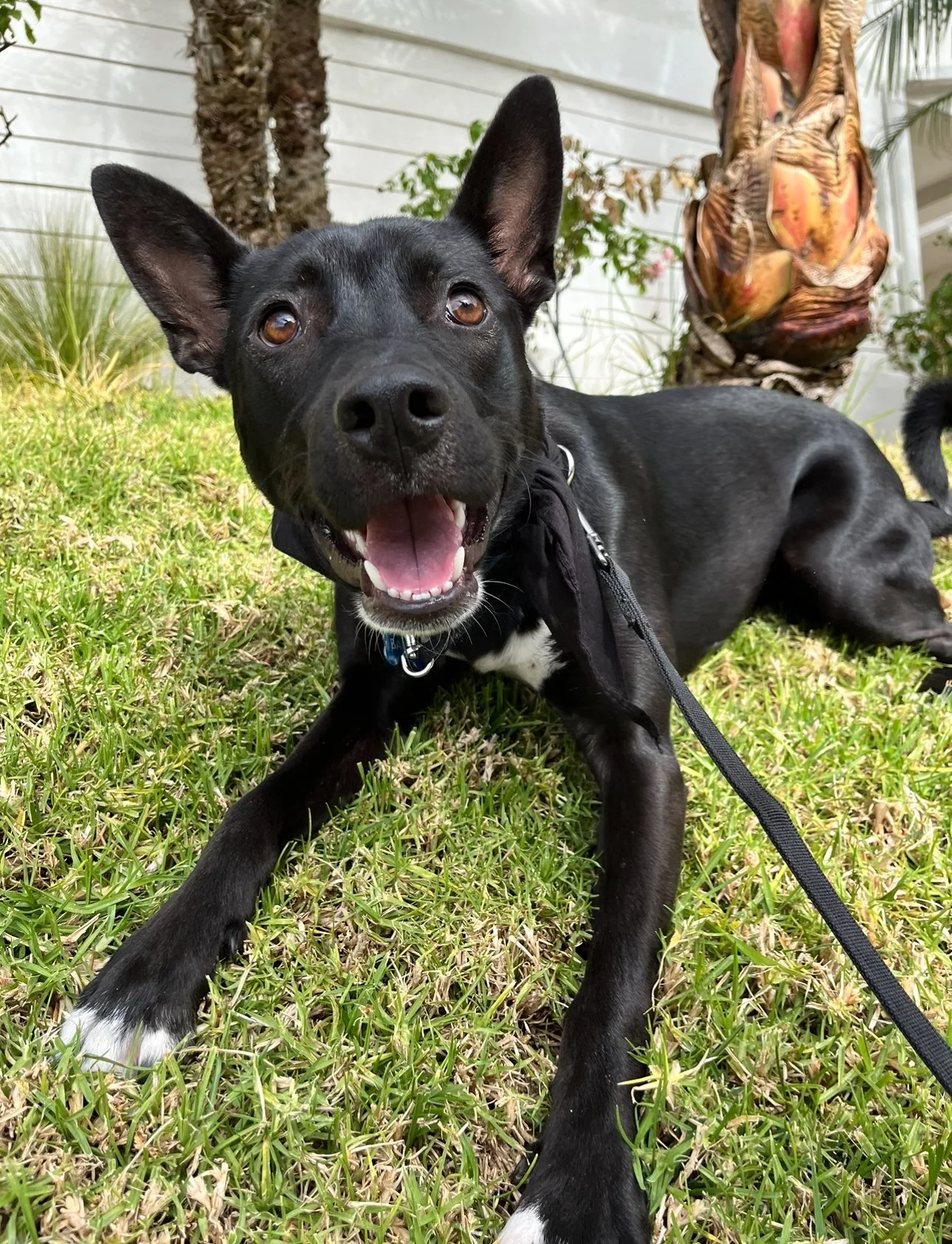
The Puppy Academy student, Bailey!
What This Usually Looks Like
You go to grab the leash or harness and your puppy:
runs away
jumps, bites, or spins
turns it into a game
only “accepts” it when they’re tired
And suddenly something that should be simple…feels like a struggle every time.
What’s Actually Going On
From what we see over and over, this isn’t random behavior.
Nothing lives in a vacuum.
If your puppy is fighting the leash, it’s usually connected to:
1. The Leash Only Appears During Conflict
If the leash only comes out when:
you need control
you’re in a rush
or your puppy is already overstimulated
…it quickly becomes something your puppy wants to avoid.
2. Accidental Pressure Creates Resistance
Many puppies start resisting because of unintentional leash pressure.
pulling them toward you
guiding too much too soon
tension before they understand it
This creates frustration… not clarity.
3. It’s Become a Game
If your puppy has learned:
run away = you chase
grab leash = you react
NOW, putting the leash on is fun (just not for you)!
4. There’s a Relationship Gap
This is the bigger one.
If your puppy:
ignores you
pushes boundaries
struggles with basic guidance
The leash becomes the place where that shows up most clearly.
What We Do Instead (This Is the Key Shift)
Instead of chasing your puppy around…
The leash becomes part of your routine — not an event.
This is how you do it:
1. The Leash Goes On Immediately
Before your puppy even comes out of the crate:
The leash is already on.
No chasing.
No “come here so I can grab you.”
No negotiation.
This alone removes most of the struggle.
2. Stop Making It a Big Deal
Putting the leash on should feel neutral.
Not:
exciting
rushed
or reactive
Just calm, consistent and predictable.
3. Use Counter Conditioning (When Needed)
If your puppy already dislikes the leash, break it down into small steps:
leash touches = food reward
harness near body = food reward
over the head = food reward
Before you even clip it on, build comfort first, then expectation.
4. Avoid Pulling Them Around
Don’t use the leash to drag your puppy into position.
Instead:
use food to direct them
use body language
guide them without tension
You can teach leash pressure later. First your puppy needs to feel comfortable, not restricted.
5. Eliminate the Chase Game
If your puppy runs when they see the leash, don’t play the game!
Instead:
call them to “Place” (pet cot, dog bed, or their crate)
put the leash on there
keep it structured
No more chasing around the house.
What This Should Feel Like Over Time
When done right, your puppy starts to:
stop reacting to the leash
accept it calmly
stay while you put it on
move with you instead of against you
Not because they were forced, but because the situation finally makes sense and they know it’s part of the routine.
A Quick Reality Check
If putting the leash on feels like a daily battle, it’s not a leash issue.
It’s a:
structure issue
handling issue
or clarity issue
And once you fix that, the leash becomes easy.
Want Help With This Step-by-Step?
If you want a clear system for leash training, daily structure and calm behavior, our Online Puppy School is built for new puppy parents who want to get this right from the beginning.
Inside, we show you exactly:
How to introduce the leash properly
How to build cooperation (not resistance), and
How to avoid turning everyday things into struggles
Final Thought
The leash isn’t the problem. How your puppy experiences it is.
Make it calm, consistent, and part of your routine…and everything starts to change.
This question originally came up on our Ask A Puppy Trainer podcast, where our trainers discuss age-specific puppy behavior in more depth. You can listen to the full episode here → on Apple Podcasts or on Spotify.
Have more questions about your puppy? Ask our trainers LIVE every Wednesday at 1 pm PT on our Instagram @thepuppyacademy during our Ask A Puppy Trainer Show! All replays are posted afterward, and you can catch up on our last ones on our YouTube channel or Podcast.
Become a Puppy Academy VIP (Very Important Puppy) to get our latest puppy training tips direct to your inbox, for free, each week!
This article is part of our Puppy Behavior Basics series.
Related Puppy Training Help: