
Do you ever get the feeling your puppy is trying to tell you something? Those loving eyes, happy yips, and of course, the excited tail wag! You’re not wrong! Understanding what your puppy is communicating will make your relationship all that much stronger!
Puppy body language is the first form of communication our pups have to demonstrate what they are feeling and when socializing with other dogs and people. It’s up to you as a new puppy owner to learn and understand those signals in order to best communicate with them. Unlike us, where we can just say what we’re feeling or need, our pups have to show it through their eyes, ears, mouth, tail, posture, and fur -- yes their fur! Little body cues that reveal volumes of information for us to understand what’s going on inside our pup’s mind. Why is this important? Not knowing the puppy body language cues can mean you may not be fully understanding what your puppy needs and what they’re feeling. Familiarize yourself with basic cues that all puppies and eventually grown dogs use to communicate with us, other dogs and people!
As a new owner, you’re going to be tackling basic puppy training, socialization, and introducing your puppy to the world; knowing whether your puppy is happy or anxious can make the difference in helping them to grow up well-adjusted to different situations.

@beaglekiki
What are the Body Language Cues?
Puppy body language involves their entire body: the eyes, ears, mouth, tail, and fur. Your pup’s overall posture broadcasts different emotions such as excitement or nervousness. Each cue on their own could mean a variety of things, so it’s important to learn them and take into account their entire disposition, not just one portion of it, to best gauge what your puppy is actually feeling!
NEED PUPPY TRAINING ADVICE? ASK A PUPPY TRAINER!
Eyes

@sienna_rose_all_american_lab
Your pup will be giving you loads of puppy eyes their entire life! Don’t you want to know what’s behind them?
Droopy, low eyelids or even slow blinks can indicate your puppy is happy and relaxed. They may do this when getting pet on the ears or belly rubs!
Wide-open eyes or “whale eyes” when you can see the whites of your pup’s eyes are their way of saying they are alert to something or someone, and feel unsure and need some space.
If your puppy is averting their eyes, it's possible they are anxious about the situation and they need some space, or they are exhibiting signs of softness and submissiveness. Dilated pupils or locking eyes in puppies and dogs may be a sign of them potentially being overwhelmed, overstimulated or over-aroused. Too much arousal can lead to a risky situation, so give your puppy extra space if you notice this happening. However, this can also just mean your puppy just wants to pounce excitedly on another puppy or human to play! This is why it’s important to take the time to observe the rest of your pup’s demeanor. A good indicator to decipher between the two scenarios is if you notice your pup's hackles (the fur running down their spine) up and/or them puffing out their chest to make them look bigger, then it would be a good idea to give some more space.
Mouth and Teeth

They may not be able to speak (well, some can if you train them too!), but your puppy’s mouth is definitely telling you something!
A partially open mouth with tongue sticking out means your puppy is relaxed and happy, usually when they are getting pets and cuddles. Occasionally, puppies will open their mouth and show their teeth, but it's just over-excitement rather than indicating something bad. Think of it more as a happy grin! Usually, this excitement is accompanied by a wagging tail or wiggly butt.
If your puppy is pulling their lips back, showing their canines and nipping, especially at another puppy, this often means they're overly-aroused and need to be separated. A skilled trainer can help you address how to navigate through this behavior.
Sometimes during play, one pup can get overzealous and start to target a submissive puppy. If the submissive pup yelps out, it's important to advocate for the submissive pup by initiating a play break. By doing this more and more you'll learn your puppy's tendencies and be able to catch them sooner.
Pro Tip: Prevention vs. reaction is more beneficial in a socialization situation like this! Make sure you are monitoring your puppy during playtime and separate the pups if need be. If your puppy tends to be more on the submissive side, you don't want them constantly to get picked on by over-confident puppies.
CHECKOUT OUR TIPS ON HOW TO SOCIALIZE YOUR PUPPY!
Ears
Straight up or floppy, your puppy’s ears are communicating loads of emotions!
Some ear shapes are easier to read than others but for the most part, ears standing up and facing forward can signify alertness. Whereas pinned-back ears can signify being nervous or unsure, but they can also mean they're relaxed and submissive if accompanied by a wagging tail. The best way to really gauge what your puppy body language is saying is to look at the rest of their body and overall demeanor.
Tail
@goudadoodle
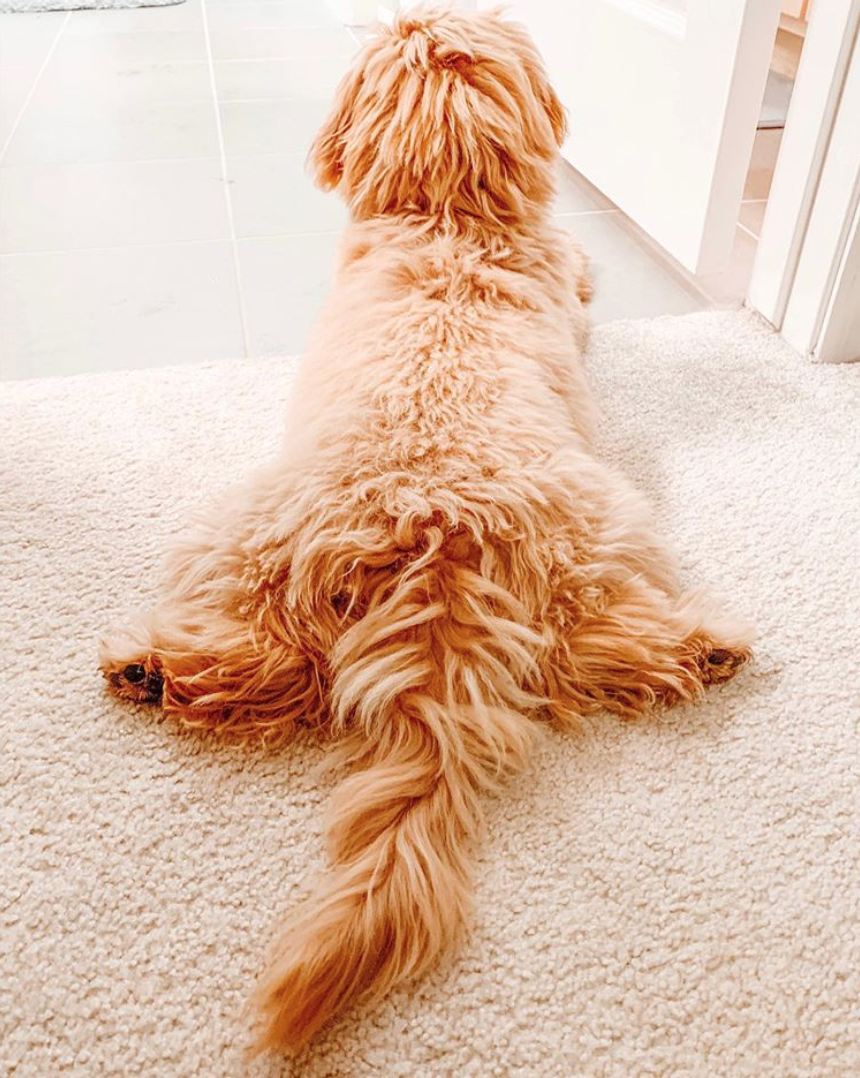
Your puppy’s tail is perhaps the most expressive and easiest to read!
A wagging tail generally means a happy puppy but sometimes, and depending on the rest of their body language, could be sending out a different signal. If your pup is wiggling their hind and wagging their tail, they are showing you they are happy!
While a stiff wagging tail pointing straight up can mean your pup is either alert to something or someone, or they feel overstimulated and need some space to relax.
Fur
Did you know that your puppy’s soft and fluffy fur isn’t just for show? It’s one of their tools for communicating with you and other pups!
The fur along your puppy’s spine also known as hackles will stand up if your puppy is excited, over-aroused, or overwhelmed with a situation or energy. It may not be always clear and sometimes can be involuntary but if you read the rest of your puppy’s body language combined with raised hackles, you can gauge your puppy’s emotions!
Posture

@louiebhatia
Taking all the different cues into account, your puppy’s entire body is communicating to you!
If you notice that your puppy is stretching, they are most likely chill, relaxed, and happy! And a wiggly, loose body means they are very relaxed and happy! Know the term “downward dog”? Well in yoga it means a specific post, but for puppies, it can mean play!
Dominant puppies tend to carry themselves much differently than submissive puppies. You might notice your puppy pushing, bumping into or leaning into other puppies. They are “walking tall” and showing off their assertiveness.
Whereas a puppy who flattens their ears lowers themselves to the ground or even tucks their tail between their legs is showing submission. If your puppy rolls over on their back, exposing their belly, it can be a show of submission and a level of comfort with you. But it can also mean they are uncomfortable, so keep an eye on the other behaviors they're showing!
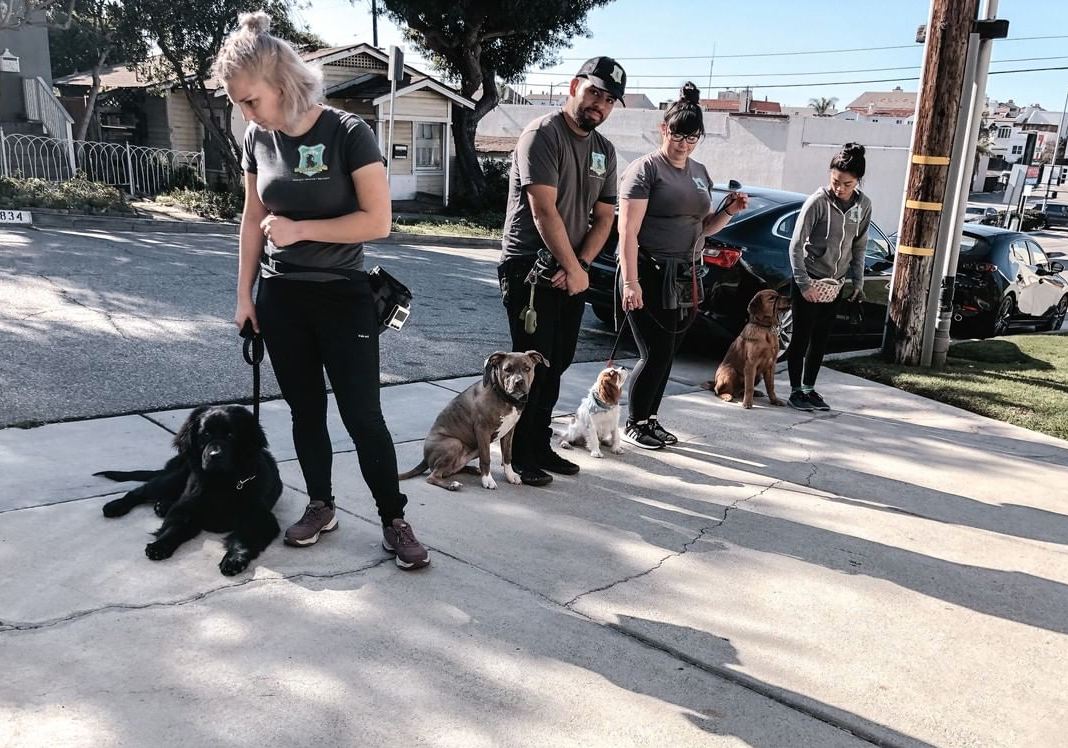
For us at The Puppy Academy, picking up on these nonverbal cues really helps during puppy training and to encourage proper behaviors. Observing as the puppies play and interact, we can easily tell if a student is very confident or shyer, and we can match them with other puppies of similar temperaments to socialize with. We’ll also step in to regulate the play intensity levels and help instill positive play interactions and good habits between them as the puppies learn and grow.
Do You Know Your Puppy’s Body Language?
As your puppy grows into adolescence and adulthood, so too will their behaviors develop, especially when it comes to socializing and interacting with other dogs and people. Over time, you’ll start to hone your skills and instincts to understand your puppy’s body language. However, knowing what to look out for in the beginning when you first get your puppy can help you start to build a trusting bond, facilitate you in puppy training, and be aware of cues your puppy is sending in different situations and how best to address them!
WANT MORE PUPPY TRAINING TIPS? SIGN UP TO RECEIVE OUR BLOG ANNOUNCEMENTS!
Check out these related blogs on puppy training!
How to Stop Your Puppy From Nipping!