

Quick Answer:
If your puppy sleeps in the crate overnight but cries during the day, it’s usually not “crate training failing” — it’s daytime energy + overstimulation + not enough structure. Fix it by checking off three boxes before crate time (physical outlet, mental work, calm hanging out), keeping a predictable crate/awake schedule, and using a simple three‑strike rule to know when your puppy is actually ready for a nap.
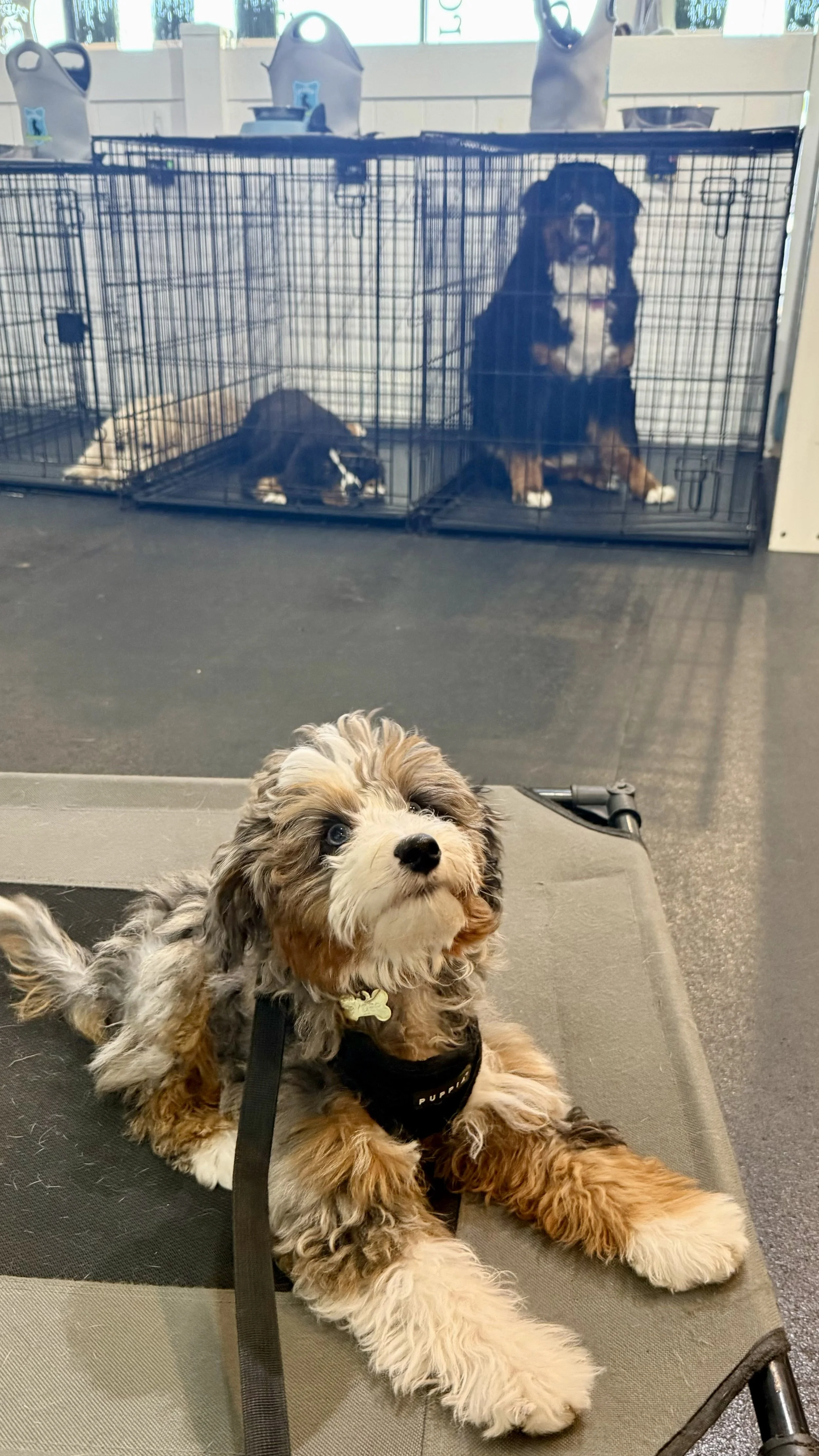
The Puppy Academy student, Ryder!
It’s one of the most confusing puppy problems:
“She sleeps 8–10 hours in the crate at night…”
“…but during the day she wails the second I crate her.”
Totally normal — and very fixable.
Nighttime is naturally easier because puppies already want to sleep. Daytime is different: your puppy has more energy, more FOMO, and fewer natural “off switches.” The goal is to teach your puppy how to settle during the day, not just tolerate the crate at night.
Why This Happens
Most daytime crate crying comes from one (or more) of these:
Not enough energy released before crating
Too much freedom (so the crate feels like a punishment)
Overstimulation (they’re cranky-tired, not “full of energy”)
No practice being calm outside the crate
Your puppy isn’t trying to be dramatic — they’re communicating.
The 3 Boxes to Check Before Daytime Crate Time
Before you crate your puppy for a nap, aim to check off these three needs:
1) Physical outlet
This doesn’t have to be a marathon. It’s simply enough movement to take the edge off:
a short working walk (or several minutes of structured movement)
a play session (tug, fetch)
2) Mental work
Mental work tires puppies out fast:
approx. 10 minutes of training using their food (different breeds/ages may need more or less)
slow patterning (slow down their training speed as you do place, house, come, etc.)
impulse-control reps (sit, down, place, break)
3) Calm existence (aka “supervised separation”)
This is the piece most people skip.
Your puppy needs practice being calm outside the crate so they can learn to be calm inside the crate. And be partially separate from you.
Examples:
5–10 minutes with a chew toy in their playpen
hanging out on a leash tethered to you while you do something quiet
practicing “do nothing” time (calm + boring) on their place cot or dog bed
*Don’t miss this: Also, refrain from giving a lot of affection to your puppy before they go back in their crate! This can also cause more whining and crying when they do have to go back in and miss all the attention they were receiving.
When these three boxes are checked consistently, daytime crating stops feeling abrupt and unfair.
The Most Common Mistake: Putting Them Away Too Soon (or Too Late)
Two timing errors cause most daytime crate drama:
Too soon: your puppy comes out of the crate and immediately goes back in without any real outlet
Too late: you keep them out past their window, and now they’re overstimulated and cranky (the puppy version of a toddler meltdown)
If your puppy gets bitey, zoomy, barky, and can’t settle… they might not need more play — they need a nap.
Use the “Three‑Strike Rule” to Know When It’s Nap Time
This is one of our favorite simple tools for daytime regulation.
When your puppy is in their awake window, you’re teaching calm. If they start to lose it, don’t debate it — track it.
A “strike” is any behavior that signals overstimulation, like:
jumping repeatedly after being redirected
nipping hands/clothes/shoes harder
chewing carpet/furniture edges
barking, frantic pacing, ignoring redirection
Strike 1: redirect calmly
Strike 2: redirect again (food, body block, toy, change activity)
Strike 3: no scolding, no drama — it’s crate time.
Take a deep breath, wipe the emotion off your face, clip the leash, and calmly walk your puppy to the crate.
This prevents escalation and teaches:
“When I’m tired and losing control, my humans help me settle.”
What Your Daytime Routine Can Look Like
Here’s a simple example for a 4–6 month puppy (adjust based on your puppy’s breed, energy, age and potty training status):
Potty (calm + neutral)
5 minutes sniffing/enrichment
10–15 minutes of walk or play (edge off)
10–15 minutes training (kibble works great)
10–15 minutes calm hanging out (chew / leash hang)
Back in crate for nap (give water + food, if meal time)
What If Your Puppy Refuses to Go Into the Crate?
If your puppy is overstimulated, they may resist.
Keep it calm and simple:
guide with the leash
toss a treat into the crate (if they’ll take it)
if needed, gently guide from behind (hand under the bum) with steady, calm pressure until they’re fully in
This isn’t punishment — it’s help.
And once your puppy is reliably going in, practice the crate cue during the day when you’re not leaving:
send in, reward, release
repeat 5–10 quick reps
Make Sure You’re Not Accidentally Fueling the Crying
A few quick reminders:
Don’t hype up potty breaks or crate transitions
Keep your energy neutral and boring
If you talk nonstop (“go potty! go potty!”) you can accidentally keep your puppy amped
Daytime crating works best when it’s part of a predictable rhythm — not random
When Daytime Crate Crying Needs Extra Help
If you’ve tried structure and your puppy is still panicking (drooling, hurting themselves, nonstop screaming), that may be more than normal fussing.
That’s where getting a professional plan matters — because you don’t want to accidentally rehearse panic.
Want a Step-by-Step Plan?
Our Online Puppy School gives you a clear daily structure (crate rotations, potty schedules, calm training, and behavior foundations) — plus weekly live Q&A support so you’re not guessing.
You don’t have to power through this phase alone.
This question originally came up on our Ask A Puppy Trainer podcast, where our trainers discuss age-specific puppy behavior in more depth. You can listen to the full episode here → on Apple Podcasts or on Spotify.
Have more questions about your puppy? Ask our trainers LIVE every Wednesday at 1 pm PT on our Instagram @thepuppyacademy during our Ask A Puppy Trainer Show! All replays are posted afterward, and you can catch up on our last ones on our YouTube channel or Podcast.
Become a Puppy Academy VIP (Very Important Puppy) to get our latest puppy training tips direct to your inbox, for free, each week!
This article is part of our Puppy Behavior Basics series.
Related Puppy Training Help
If you’re working on daytime crate naps, these may also help:
Why Does My Puppy Only Whine in the Crate When I’m Home? – Safe options + what to avoid
How Create a Daily Schedule for Your Puppy – Reduce potty stress during the day
What to Do When You’re Experiencing the Puppy Blues – Support when you feel overwhelmed