
Congratulations on bringing home your new puppy! The first few months are filled with a lot of “firsts” but the most important one is establishing a lasting bond with your pup!

@penthousepippa
So why is it important to be your pup’s leader and not just their best friend? A young puppy depends on you as the “parent” to provide them with everything that they need including a safe environment with structure and stability. When you develop your role as a leader, your puppy learns to look to you when it comes to understanding what they can and can’t do. You’ll help them to understand the rules of conduct at home, and eventually in public, by providing calm and consistent guidance. This helps to diminish the chance of your puppy developing bad behaviors as they grow up. And remember it’s not their fault if they do present some antics! Puppies are curious by nature and they are just trying to figure out the world!
As you start your puppy’s training, you are strengthening your leadership role, which ripples into a lasting, life-long bond of trust and love between you and your pup! Puppy training will offer your puppy the chance to work, play, and grow. And learning basic commands and routines gives your puppy a sense of purpose that stays with them even as they mature. Ultimately, puppy training places your pup on the path to becoming not only a well-behaved member of the family but a good citizen too! That means your pup will have more freedom to be your companion not just at home but in public spaces around other people and dogs!
There are a few ways that you can start to work on establishing leadership with your puppy, that doesn’t even involve basic obedience commands! These routines are ones that we use at The Puppy Academy during our in-person instruction and in our online puppy school. They’ll be your checkpoints to help you determine if you’re really on the path to becoming your pup’s leader and provide you with tips on how to course-correct if you’re not!
1. Get Your Puppy to Work for Their Food!
No we’re not saying your puppy needs to get a job to pay for their own kibble, but feedings are great puppy training opportunities! If your puppy is currently eating three times per day, use just fifteen minutes of one of those feedings to work on their commands! Nothing is more exciting than knowing tasty food is on the way, and using this to your advantage get help motivate your pup will entice them to learn and improve on their training while getting rewarded with their food when they do so! Continue to practice their commands for up to 15 minutes, and if your pup hasn’t finished their entire meal at that point, you can give them the rest to eat from their bowl!
For an extra challenge, ask your puppy to “Sit” and wait patiently as you set their food bowl down, marking the correct behavior with “Good!” and then releasing them to eat the rest of their meal. You can do this with their water bowl too!
Why do we recommend this? By having your puppy “work” for their own food, they are learning that feeding time is very valuable! As they practice their commands in exchange for their food reward, their training and your communication gets stronger! And as your pup learns to control their impulses to jump up for their food and water bowl and settle down instead, the desired behavior of waiting patiently begins to establish, and good manners start to take shape.
Pro tip: If you are in the midst of crate training your puppy but they seem to be struggling against settling in without a fuss, feed your puppy in their crate! The goal of this is to establish a positive association that going into their crate comes with a tasty reward.
2. Don’t Let Your Puppy Graze!

@mochithecorgi_hi
If you have a pup who doesn’t finish their entire feeding in one shot, one thing we recommend to all our puppy owners is don’t leave their food bowl down for them to graze! Instead, if your pup hasn’t gone for it or finished their meal after 5-10 minutes of it being out, simply remove it and try again at their next feeding.
Why do we recommend this? Scheduled meal times help get your puppy on track with their daily puppy schedule, where they can start to learn what’s coming up next! You as their leader are fulfilling all their needs and providing the things they love like food, playtime, training and walks! Plus, as an extra bonus, providing mealtimes helps the potty training process go much smoother and become more predictable for you! Pups who graze tend to have more accidents in the beginning as they’re frequently eating and moving around, thereby constantly stirring up their bowels and bladder!
3. Keep Your Puppy in Their Crate During Your Dinner Time!
One thing we’ve learned after working with thousands of puppies over the years is that puppies are sneaky and opportunists! And nothing is more lucrative than tasty food that falls down from the dinner table. If your puppy is currently roaming the house or at your feet while you're eating, there’s a great chance of your pup finding and eating scraps from your dinner. While this isn’t a major issue at first (aside from a potential upset tummy) if it continues without being managed, you’re essentially creating a beggar for scrapes!
Show your puppy what you'd like them to do while you eat by placing them in their crate or a playpen when you’re going to sit down to eat dinner. Give your puppy a chew toy to play with or simply let them relax and make it one of their designated nap times.
Why do we recommend this? A puppy that surfs for scraps can turn into a beggar. As your puppy grows, this behavior can develop into other undesirable behaviors such as jumping up and counter surfing! That can be a very troubling, and difficult habit to break when your puppy is older. Plus, most prepared human food isn’t good for pups and can really upset their stomach.
4. Who is Leading Who on the Leash?

@kung_fu_klaus
Leash manners are a life-long necessity for your puppy and it starts before you take your puppy on their first walk! Your puppy’s natural curiosity will often be to run out of the door first to see what’s on the other side. That can be troubling and even dangerous in some cases if left unmanaged. The simple act of getting your puppy to practice a little patience at thresholds can help to mitigate this impulsive behavior and set your puppy up for learning great leash manners!
You can practice controlling your puppy’s urge to dart by putting your puppy on a leash and asking them for a “Sit” and creating a moment of pause before going out the door to really solidify their impulse control. And when walking through the doorway, make sure you are either stepping out together, or that you are leading first, rather than your pup!
As you move on to walking your puppy outdoors, in the beginning your pup may not walk the way you want them to and be all over the place. That’s totally to be expected! But, it’s our job as their leader to help mitigate that leash-pulling and teach them to take our lead when outside, instead of their own. The best way to start introducing your puppy to walking on leash and checking in with you is at home! Walk them on a short leash from one room to the next, in the backyard, or in your driveway, and slowly expand from there. Their first walks should be “working walks” that are between fifteen to thirty minutes and a combination of walking and command practice. This tends to work them both physically and mentally, while promoting their focus on you when on leash. A shorter mentally-stimulating walk can be even more effective at tiring out your pup than a longer physically exhausting one!
Why do we recommend this? Darting through an open door is never good! Your pup could potentially run into a busy road or may even pull you down in an effort to run! Plus it sets an excited tone for the walk, instead of beginning it calmly to encourage a controlled, loose-leash walk where you walk your pup, instead of the other way around!
5. The Right Way to Play with Your Puppy!
Games and playtime, yes playtime, also serve as puppy training sessions and a great way to establish yourself as your pup’s leader! We all want to play with our puppies but it’s important to keep in mind that pups learn from behaviors and we have to show them the desired ones! Structured games like tug-of-war with a rope or Fetch, for example, present an opportunity for you to lead playtime while managing your pup’s energy level, and teaching the important command “Drop-It”!
The Drop-It command helps you be able to be in control of playtime with your pup and entices them to listen, especially if they want to continue to play!
Why do we recommend this? Structured playtime helps to teach your pup good manners, as well as what’s acceptable play, and what isn’t. As the leader of play, you’re able to start, stop it, and ask for the toy with Drop-It at any point you feel your pup needs to take a break to lower their energy before starting up again!
Pro tip: Once your pup knows “Drop-It” you can use it in other scenarios where you may need to take possession of something your pup has gotten ahold of that they shouldn’t, like one of your favorite shoes!
6. Help Your Puppy Become Comfortable with Being Handled!

@chloetherealhousepup
Teaching your pup it’s okay to be touched in different areas of their body is super important so they become comfortable with being groomed and handled. Practicing this daily with your pup helps to straighten your bond and build more trust as their leader!
Make it a point each day (preferably during some downtime when your pup is more chill) to touch them on their muzzle, ears, belly, tail and paws to get them used to the sensation, and reward them with a treat when they do well! Your puppy will experience being touched in a variety of situations like the veterinarian, kids at the park, guests coming over, and the groomer, so your job is to prepare them!
When introducing a new object for grooming them at home like a brush, baby wipe, dremel, or hair dryer, make the experience comfortable by using their food as a reward, and slowly introducing the new item to them. In the beginning it might take a few attempts before your puppy is comfortable enough around the grooming tools.
Why do we recommend this? Teaching your puppy to be comfortable with handling and grooming is just a part of early socialization! As your pup’s leader, finding opportunities to safely expose and work your pup through real-life situations will help them grow up to be well-adjusted dogs.
Pro tip: Use one of your puppy’s feeding times as their grooming session! You might end up feeding them an entire portion of food the first few times you try to groom your pup so why not combine the two sessions? And if your pup loves to snuggle at a certain time of the day, make that the time to touch them in different areas on their body as you rub them!
7. Set the Tone for Greeting Guests!
Puppies can get pretty excited when someone new arrives so it’s up to you to guide them how to behave and manage their energy level! Generally, it’s a good idea to keep your pup in a separate area before they greet your guest. This gives them enough time to settle down, while still being aware that there is someone new in their home.
The next important step is educating your guests on the correct way to greet your puppy! There’s nothing more exciting than a cute puppy (we should know!) and the temptation to gush over them is tough to resist but ask your guest to keep their emotions to a minimum! In fact, ask them to not give your puppy any attention at all if your pup is jumping up or barking at them. Only when your puppy has settled down, that’s when your guest can reward them with their attention!
Why do we recommend this? Greeting is just another one of those daily occurrences that you need to prep your puppy for with the right rule of conduct. A small puppy jumping vs. a large eighty pound dog jumping up are quite different scenarios! Teach your puppy their respective boundary now i.e. it’s not okay to jump on people, and you’re essentially instilling a good life-long behavior!
8. Crate Your Puppy to Create Good Habits!
@the_white_home_decor
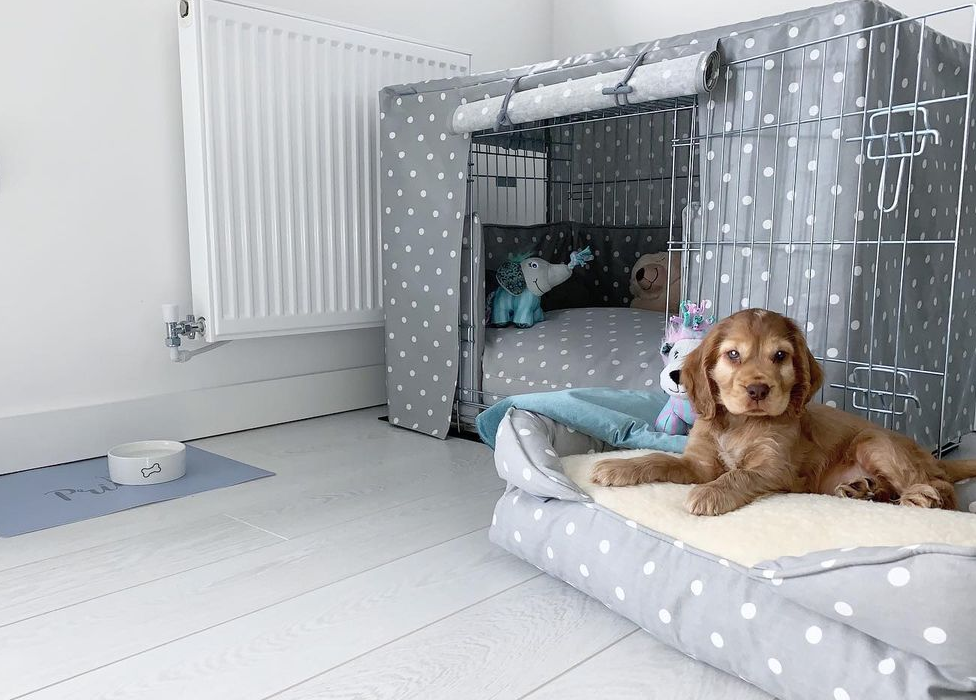
If you brought home your new puppy and are debating whether or not to crate your puppy, this is for you! Of course it can be tempting to want to sleep with our pup and cuddle with them but your puppy's crate offers plenty of benefits that you might not be aware of. For starters, a crate provides your puppy a kick start at feeling a sense of security, while developing confidence, and independence.
During the daytime, it provides structure, helps them settle and get the sleep they need, teaches them how to be ok to be alone, and keeps them out of getting into trouble when they can’t be supervised! This is all so important for you as their leader to help your puppy grow up into a well-adjusted adult dog that you can trust in the home!
There are other practical factors to crate training you might not have considered such as traveling or over-night vet visits to name a couple. Pups that aren’t crate trained early on may potentially struggle with it later on in life, and some may not ever settle into their crate which can present a problem if you need your puppy to be crated at any point.
We understand it can be difficult at first, especially when you’re starting to teach your puppy to sleep through the night but you can start introducing the crate into your puppy’s routine each day with your puppy’s schedule.
Why do we recommend this? Crate training is an invaluable asset and tool in your puppy’s life! A couple huge benefits are how much it helps to speed up the potty training process, and helps prevent separation anxiety! Check out our crate training blog for more benefits!
By practicing these guidelines, you’re well on your way to establishing a healthy leadership role with your puppy! Each day, your bond will continue to grow as your puppy learns to trust you and learns to enjoy their new daily routines. You’ll have a foundation built on strong communication which will help your puppy thrive at learning their new basic obedience commands and succeed at becoming a great canine citizen!
Check out these blogs related to puppy training and more!
Why Puppy Training is so Important!
Help! How do I Get My Puppy to Sleep Through the Night?
I Got a Puppy Over the Holidays! Now What?