
Nipping, chewing, and jumping are some of the most common and troublesome puppy behaviors. With the tips in this blog, you’ll understand how to spot the signs your puppy is about to do them, curb these habits, and establish good behaviors instead!
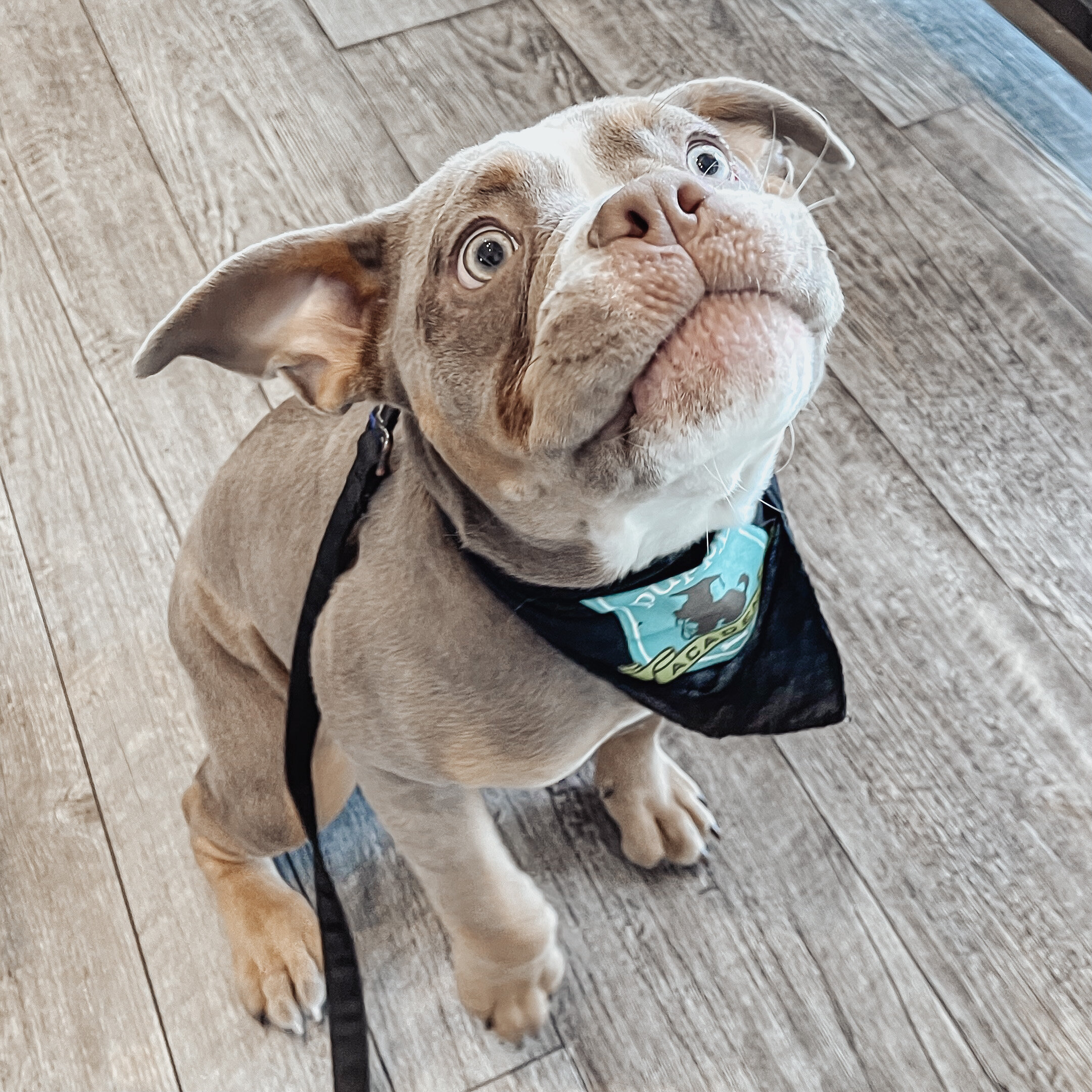
The Puppy Academy student, Maya!
Ouch! Is your puppy making your hands and feet their new favorite chew toy? New puppy owners often come to us asking “how do I get my puppy to stop nipping and chewing on me and everything else?” These behaviors are very common for young puppies but luckily, there are cues that can help you identify when your puppy is about to act on one of these behaviors. Once you understand how to spot them, you can start to work on preventative techniques to curb those behaviors and begin teaching them good ones!
Learn to Spot Your Puppy’s Nipping Patterns!
Do you notice that your puppy starts to get nippy at certain times of the day? Oftentimes, this can be triggered by normal things like needing to go potty, hunger, crankiness because they need a nap, or extra energy if they missed a playtime or puppy training session.
One common pattern we hear from our students’ parents is around nighttime when your puppy may still be wound up from the activities of the day. In general puppies, especially young puppies, have a short window of time where they are willing to get petted or settle. So what you’ll start to notice is that if you’ve been petting your puppy or trying to get them to settle down for a few minutes, suddenly they might start nipping and chewing!
Take note of the times when your puppy begins to show any signs of extra nipping. Knowing when these behaviors occur will help you understand what could be triggering them and how to begin to prevent them!
So how do you handle your puppy if they are showing these behaviors without becoming a chew toy yourself?
Redirect Your Puppy’s Nipping!
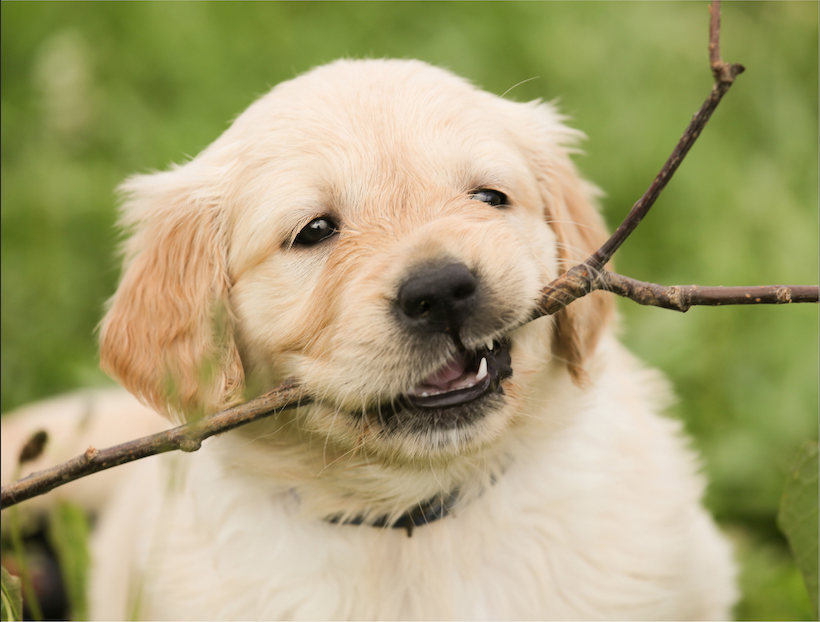
Often the default reaction is to say “No” to your puppy to attempt to get them to stop. Saying “No” without first establishing what that word means or really what the consequence of that word is, won’t help you to get your puppy to stop. For this, we created a sequence to follow that establishes the cause, your puppy nipping or chewing, and the effect, “No” followed with a redirect or end of your interaction with your puppy.
Establish that this is not the desired behavior by firmly saying, not yelling, “No” and remove your hand. The goal is to mark this behavior as undesired and break your puppy’s attention from nipping.
After you have established “No” offer a chew toy to redirect your puppy’s attention to the toy instead of you.
But if that doesn’t work, for this next tactic in the sequence, remove yourself entirely as a nipping option! Again, tell your puppy “No”. Pause for a moment and this time stand up, look away, and freeze. What this does is disengage your puppy and make you a less exciting target for their nipping.
For the last tactic, if your puppy is still nipping or chewing, don’t react to them but instead remain very calm to not further excite your puppy. Simply pick up your puppy and place them into their crate or playpen, and walk away. This isn’t a punishment which is why we recommend not adding any additional emotion. What you’re doing is simply showing your puppy that those behaviors will result in the end of interacting with you and will give them some time to settle down.
What is the reason behind not adding emotion behind saying “No”? When you start to establish “No” to mark undesired behavior, your tone should be firm but calm, and not show any excitement or frustration. Puppies interpret emotions and body language as either your way of engaging them, but also can create a negative association such as punishment. “No” is not meant to be used to reprimand your puppy for doing something you don’t want them to, rather interrupt them so you have the opportunity to redirect them to do something else. If you approach your puppy in a calm manner when saying “No” and disengage them from nipping, the result with enough repetitions will then be that your puppy will learn that “No” means to stop that behavior.
Pro Tip: Just saying “No” most likely won’t be enough to make a young puppy stop biting in the beginning. Establishing boundaries in the home (like pausing in thresholds before coming out of the crate and the front door, for example), and adding in regular command training sessions with your puppy will actually help strengthen your relationship together. This will all go hand-in-hand in curbing biting habits and having your puppy listen and understand what you mean by “No” in the future and in different scenarios!
How to Prevent Chewing!
Why do puppies chew so much? Aside from the teething stage, puppies also chew because of boredom or frustration and they explore the world with their mouth! Knowing this, you can take preventative steps to stop your puppy from chewing before they do it!
One of the most common bad chewing habits we get asked about is chewing on the leash. If your puppy is doing this, they might be frustrated because they want to go toward something interesting but the leash is holding them back. A good way to prevent this from happening is using Bitter Apple Spray applied directly on the leash where your puppy can reach it to chew! This taste that most puppies do not like can help deter them from this behavior and eventually your puppy won’t see the leash as something they’d like to chew on. And this deterrent is also great to use on other items, even furniture that you don’t want your puppy to chew on too!
Along with Bitter Apple Spray, you can prevent your puppy from chewing up things at home with a little preplanning. Don’t leave out shoes, cables, remotes, or other things you don’t want your puppy to chew on! Give your puppy space where they can play, such as a playpen, where there’s no concern of them chewing up on something. Especially with young teething puppies that may not be fully trained just yet, it’ll be up to you to take some extra steps puppy-proofing your home!
What about older puppies that may already know the basic obedience commands and are still chewing or mouthing on their leash? If you have a persistent chewer, use your leash pressure to redirect your puppy’s frustration. Simply use food to get your puppy’s attention away from chewing on the leash. If that isn’t working, apply slight leash pressure so it goes taught, say the marker “No” and reward them with the food when they let go
What to do if Your Puppy Won’t Let Go of Something!
Imagine that you spent time puppy-proofing your home but your puppy still managed to get a hold of your scarf, the kitchen sponge, or the TV remote! Now they don’t want to let it go. Or worse, they are tearing it up and you’re concerned they may swallow a broken-off piece! These things happen. Here’s what to do if you need to take something out of your puppy’s mouth.
In this type of situation, calmly approach your puppy. If your puppy already knows the “Drop-It” command, now is the time to use it! If your puppy isn’t quite there yet, try these options: if you have their food or treats nearby, use them and attempt to trade them for the object your pup is chewing! If puppy loves their food, they’ll often quickly let go. If that’s not working or you’re without food, calmly grab hold of your puppy. Grasp the item in one hand, and with the other, press on their bottom jowls so the skin goes over their teeth and gently pull the item out of their mouth. This is a safe, clean way to remove an item from your puppy especially if you think it’s an emergency and they aren’t releasing it on their own. When you are doing this, remaining calm will help keep your puppy calm and they are less likely to get excited and run trying to play the keep-the-cool-thing-I-found away from you!
How to Stop Your Puppy from Jumping!
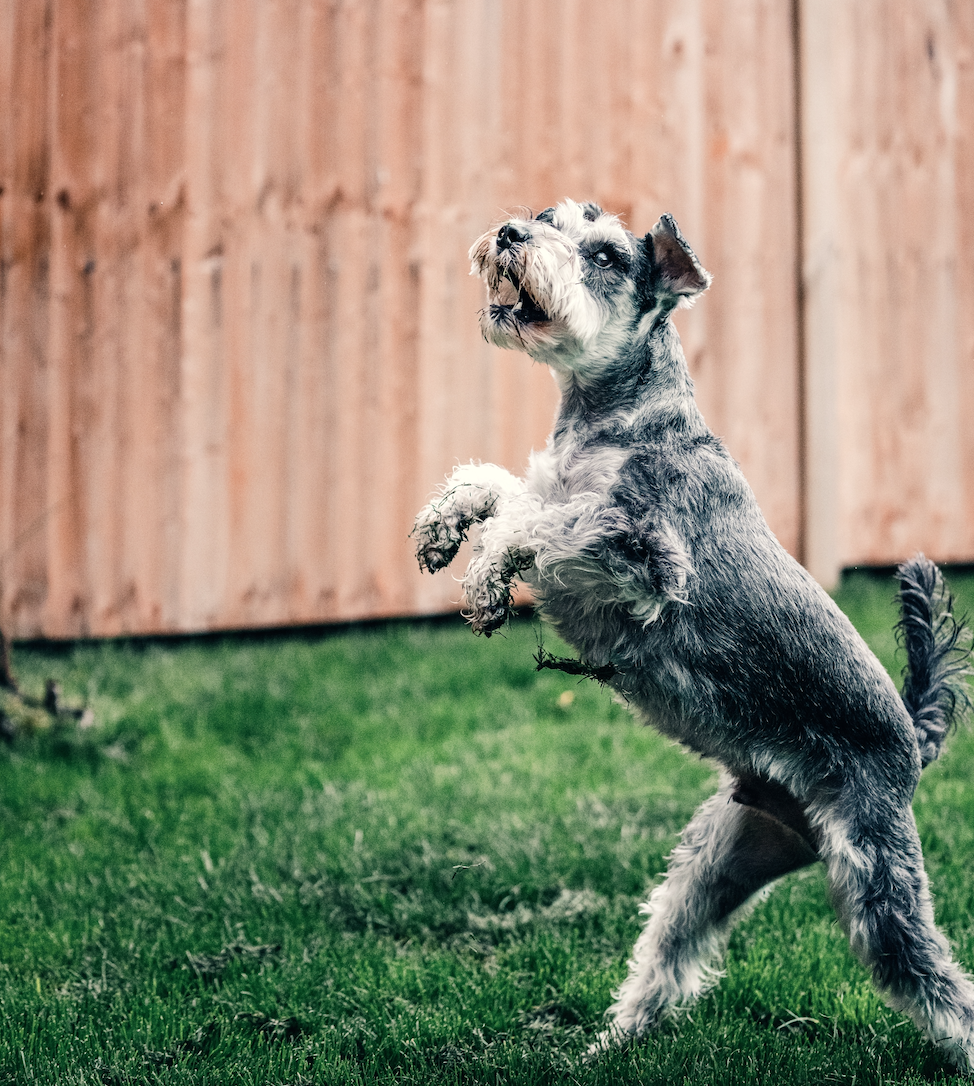
Jumping up can be a common behavior especially for those high-energy puppies! Oftentimes, new puppy parents unintentionally encourage their jumping with their own energy and tone, or by petting them when they jump up on them, so when you begin working with your puppy to stop them from jumping, remember to be firm and calm when going through these steps, and don’t accidentally encourage the behavior. The first we’ll cover is called “Blocking” or creating spatial pressure using your body.
If your puppy is jumping on you, in a firm and calm tone say the marker “No” and take a step forward rather than backward into your puppy, then follow up with “Sit”. The motion of you moving towards them often helps them naturally back off and settle. When your puppy sits, pause for a moment, still remaining calm, and then mark the correct behavior with “Good!” and reward them with some food or a treat. It’s very important that the reward also be delivered in a calm manner so you don’t inadvertently rile up your puppy again! This is a mistake we see many newer owners make by getting excited because their puppy listened and sat, however, that creates a cycle of Jump>No>Sit>Reward>Jump and doesn’t teach your puppy that you want them to stop jumping.
So what if your puppy is young and maybe doesn’t know “Sit” or even “No” just yet? In this situation, use your puppy’s leash to help you settle them down. Shorten the leash so you can apply some pressure on your puppy’s harness and hold the leash out in front of you. This technique creates space between you and your puppy so they can’t reach you. Because you’ve essentially removed yourself as an option to jump on, your puppy will eventually settle, maybe even sit down. At this point, you can say “Good!” and reward your puppy for not jumping up on you!
Lastly, follow-through with something to keep your puppy engaged in is key, especially for high-energy puppies. Puppies jump because they are looking to do something like get you to play with them or for affection and attention. Giving them food for not jumping isn’t enough and your puppy might start to jump again after a little while. So, be prepared with a toy or engage your puppy in a little training or play activity, even settle them down in their crate for a nap -- find something that will channel their energy into working or settling instead of jumping up on you.
Nipping, chewing, and jumping can be challenging behaviors and take time to work through. But don’t tackle your puppy’s behaviors on your own! Join us live each Wednesday at 1 pm PT on @thepuppyacademy Instagram for our “Ask a Puppy Trainer” show! Get real-time answers to your puppy training and behavioral questions, plus connect with other puppy owners!
Check out these blogs related to puppy training and more!
Puppyhood Made Easy for New Owners: Puppy Handling and Harness Tips!
Puppyhood Made Easy for New Owners: How to Handle Separation Anxiety in Puppies!
Puppyhood Made Easy for New Owners: Create a Puppy Potty Schedule!