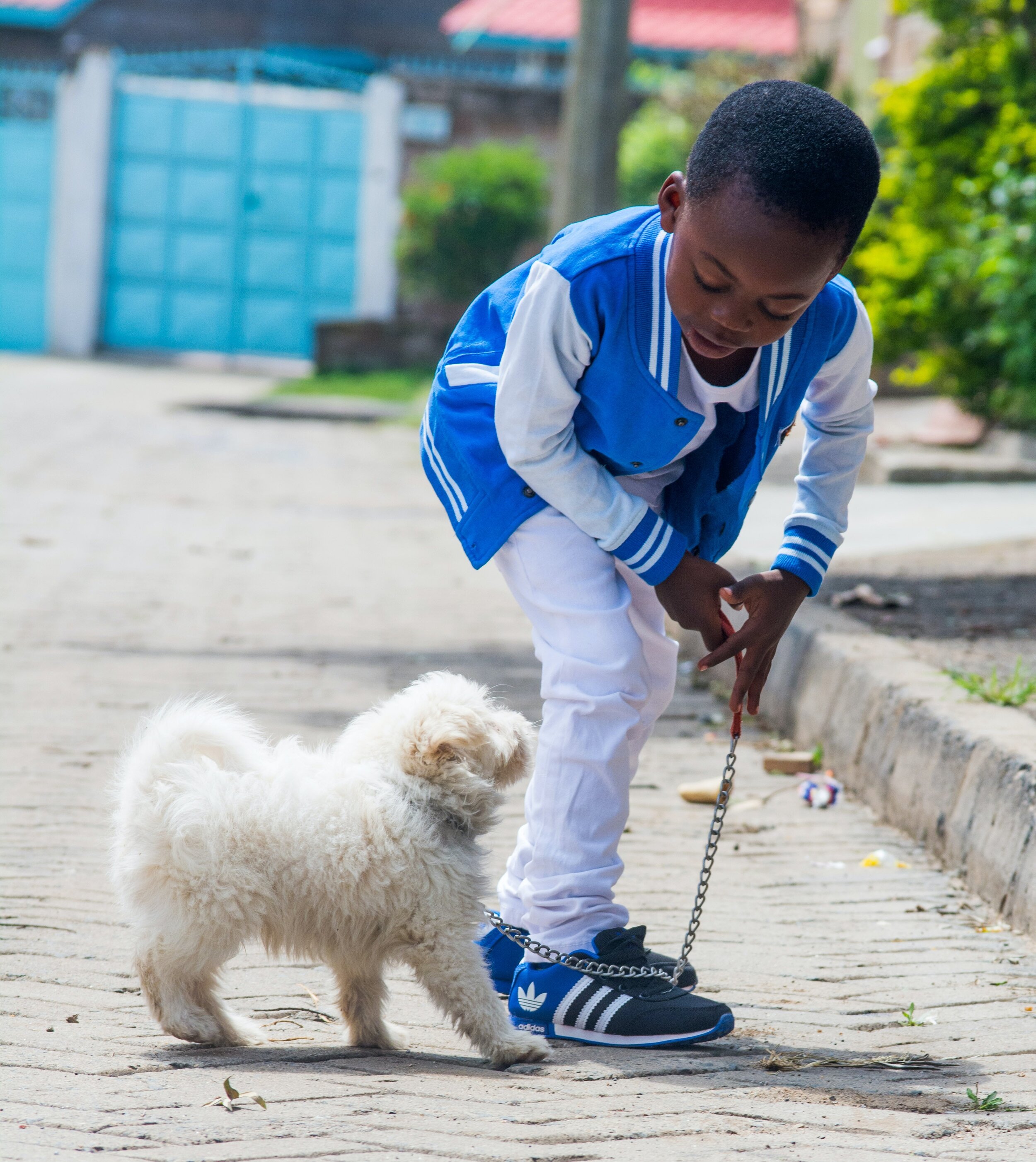

Puppies make great additions to the family! They require love, attention, and care from all members, including your children! Teaching your children the right way to treat the new family puppy, will provide them with a life-long lesson of love and respect toward another living being!

@carascanines
There’s nothing quite like seeing the excitement in your child’s face when you bring a new puppy home! From that moment, it’s not just the puppy’s training that begins but your child’s too. Kids and puppies can become great friends if your child is shown how to play and care for the new family puppy the right way. Learning early on to respect a pup’s needs, behaviors, and boundaries will not only be a great asset for your pup’s care but can help keep your child safe when interacting with other dogs in the future!
RAISING A NEW PUPPY DOESN’T HAVE TO BE HARD! LEARN ABOUT OUR ONLINE PUPPY TRAINING CLASSES!
The Puppy is NOT a Toy!
First thing’s first, teach your child that the puppy is not a toy! They are a living and feeling being that needs love and gentle treatment in order to grow up into a happy and well-mannered adult dog. Children could be inclined to include the puppy in their play activities but young puppies need time to adjust to their new home, their new family, and also need initial training to mitigate any behaviors like mouthiness. Just by simply trying to pick the puppy up, a child could easily injure a young puppy if they aren’t careful so it’s best to teach your child not to try and handle the puppy unless they are shown the right way to do it, or under your supervision.
The Right Way to Play with the Puppy!

@stevie_the_doodle
Puppies aren’t toys, but they do enjoy and need playtime in order to learn good manners and grow their bond with their family! Teach your children that certain games, like Fetch, for example, is an appropriate activity to engage with the puppy! A good game of Fetch helps with puppy obedience training for Recall where your child can teach the puppy to retrieve a toy and come back when called. This can also help the bond between your child and puppy to strengthen!
As with many puppies, sometimes they can become over-excited and stimulated by play which could lead to some behaviors like nipping and jumpiness. The more high-energy your kids have around your puppy, the more you can expect this to happen! Teach your kids to be calm when interacting with the puppy and to stop play in order not to further prompt those behaviors even more. Instead, step in when this is happening and show your kids that it's time for everyone to take a break, then pick up playtime after the puppy has had a chance to settle in their playpen or crate for several minutes.
Encourage your kids to always try and be gentle with the puppy, even during playtime! Remind your kids that activities like pulling on the puppy’s tail, ears, or poking them, for example, are hurtful and may make the puppy fearful and cause them to snap or nip, especially as the puppy grows. As with many things involved with raising a puppy, it’s best that when your kids are playing with the new puppy you’re present and ready to show them the proper way to play together!
Teach Your Child to Understand the Puppy’s Body Language!

@blessed_with_both
Guide your kids into creating a healthy relationship with your new puppy by teaching them to pick up on certain physical cues your puppy may show. And vice versa, instruct your children that their own body language and actions could elicit certain behaviors from your puppy! Running, crouching down, and squealing are just a few examples where your child could engage the puppy into chasing them and, maybe even trying to catch them with their little shark teeth, without realizing it!
Also, it’s important that kids understand that puppies need a break too, and don’t always want to be touched, held, or played with all the time! If your puppy is squirming while being held or trying to run away from the kids, let them know it’s time to give the puppy some space, and even help your pup out further with this by placing them in their playpen or crate so they can relax and nap, undisturbed.
Yes, puppies definitely can’t talk (although we wish they could!) but they “talk” using their entire body: the eyes, ears, mouth, tail, and fur. Your pup’s overall posture broadcasts different emotions such as excitement or nervousness. Each cue on their own could mean a variety of things, so it’s important to learn them and take into account their entire disposition, not just one portion of it, to best gauge what your puppy is actually feeling!
If you are unsure about puppy body language, pop over to our “Know Your Puppy’s Body Language!” blog to learn up on the different signals your puppy is giving off and include your child in the process so they can begin to understand, too!
Involve Your Kids in the Puppy’s Care and Training!
One of the best learning activities for your kids is involving them in your puppy’s training! Including your kids in puppy training creates communication between your kids and the puppy, plus establishes trust and leadership! And puppy training benefits kids, too! Learning all the puppy’s basic obedience commands and the right puppy training techniques encourage your kids’ memorization, problem-solving, and allows them to develop adaptive thinking.

@wigglebuttpoppy
When you bring a new puppy home, there will definitely be an adjustment period for the whole family! Like puppies, kids have loads of energy and will undoubtedly be excited to meet the puppy and ready to play! In a perfect world, we could say teaching your kids all of the things mentioned above would be enough for you not to have to worry. But that simply isn’t the case! It will take time for you to teach your kids how to properly care for and treat the puppy, and time to train your puppy good manners toward your kids! Your supervision, guidance, and patience as the parent and adult are vitally important to creating a happy and healthy relationship between your kids and your new puppy.
Check out these blogs related to puppy training and more!
The Benefits of Puppies for Kids!
Complete Puppy Training Schedule by Age!
How to Teach a Puppy to Walk on Leash!