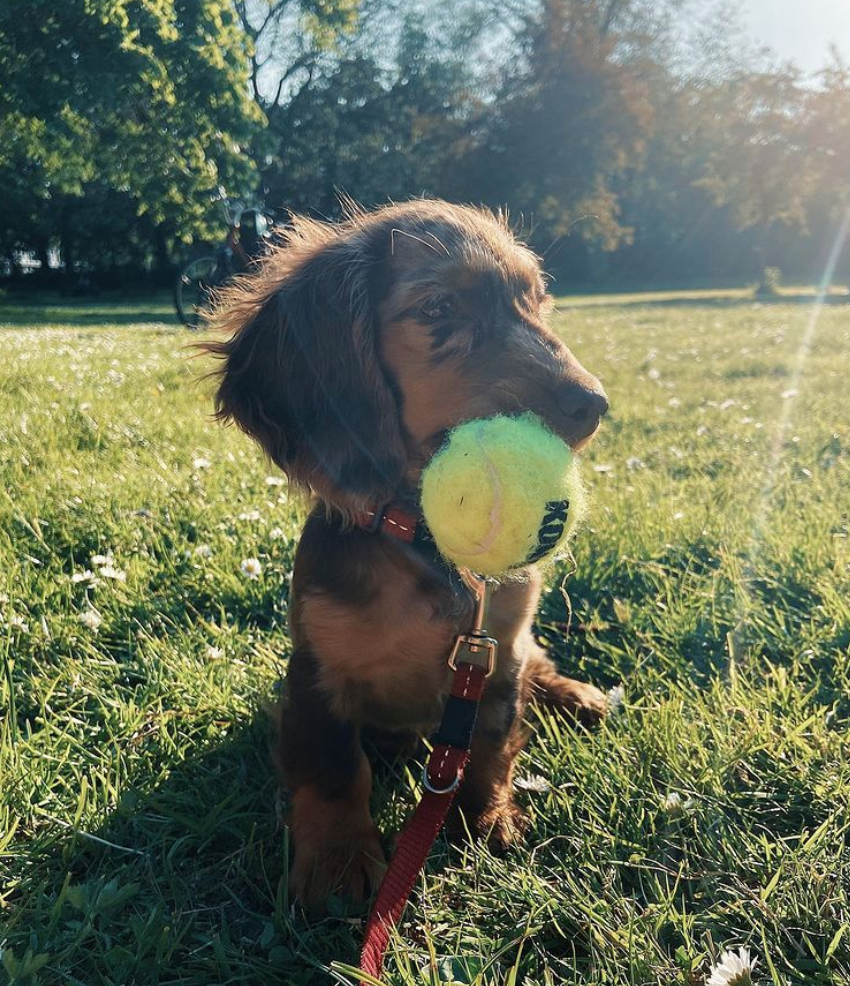

There’s nothing more fulfilling than spending the day in nature with your best friend. If this is your puppy’s first hike, prepare a few safety measures to make it the best experience for them!
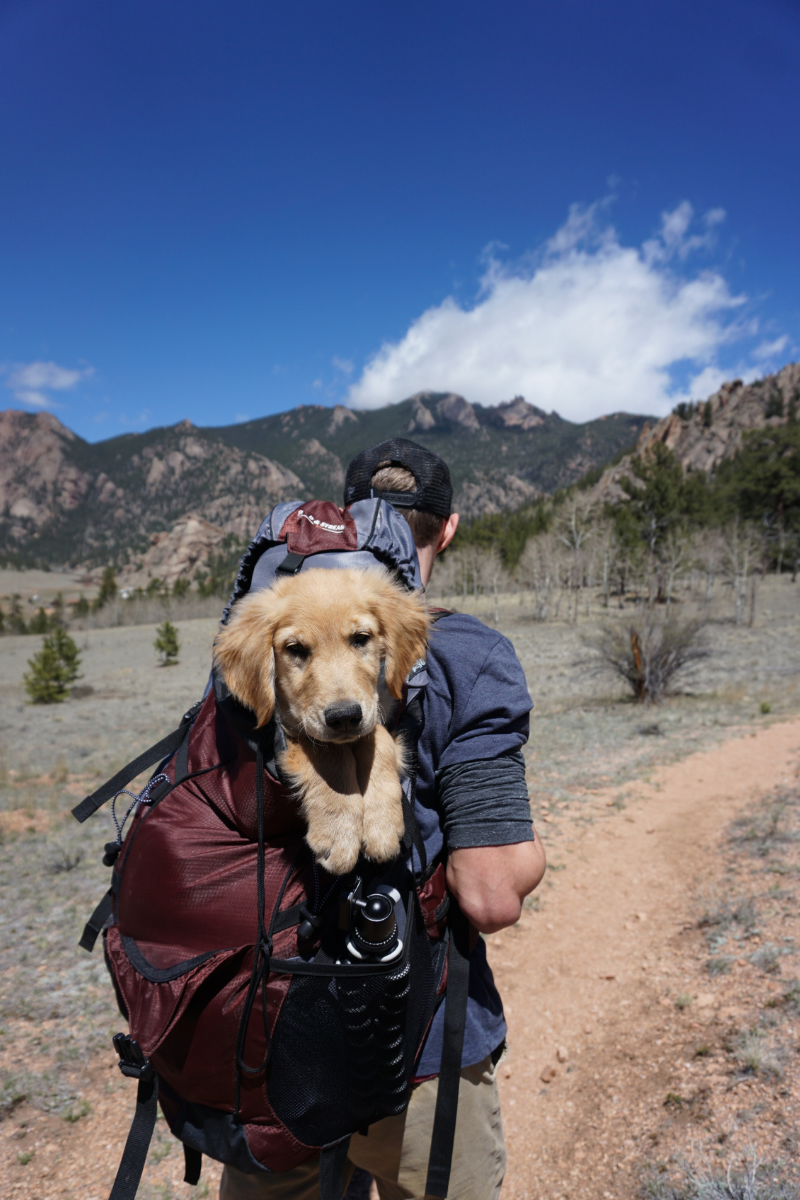
Dogs love going on adventures with their human parents! Not only is it a lot of fun, spending quality time together is highly beneficial for their health and relationship with you! If it’s always been your dream to take your four-legged best friend along with you into nature, a little preparation can go a long way. We’ll help you understand when your puppy is “ready” to hike, how to set them up for success with proper puppy training, and other helpful tips!
What Age Can Your Puppy Go For A Hike?
Puppies under the age of six months are probably not ready to hit the trails with you just yet. At six months, some puppy breeds are close to being full-grown and capable of longer periods of exercise. In the beginning plan on micro-hikes, shorter periods of time ranging from twenty to thirty minutes in easier terrain. As your puppy grows, you can increase the time they are out exploring with you!
Remember that your puppy’s age isn’t the only determining factor if they are ready to hike yet or not! Size and breed also play a major part! Large breed puppies can have longer periods of maturation for the growth plates--cartilage found at the end of large dog bones that harden into bone--to fully settle. Long hikes can result in injury and even deformation to these developing tissue areas.
The other common issue almost all puppy breeds can encounter are injuries to their footpads. Young puppies need time to build up calluses before going for a long walk with rough terrain. Thankfully, there are dog boots and ointments available that you can use to protect your puppy’s paws!
WANT MORE PUPPY TRAINING TIPS? SIGN UP FOR OUR NEWSLETTER!
Make Sure Your Puppy is Vaccinated!
Regardless of age, every puppy should have the right vaccines and taking parasite preventatives before going out into the wilderness! Depending on what age you got your puppy, you’ll want to talk with your veterinarian if you are planning on taking them out for a nature hike. Your vet may recommend you wait until your puppy receives a certain vaccine or medication.
For more information about vaccines your puppy needs, visit our blog “What Vaccines Does Your Puppy Need in the First Year?”
Socialize Your Puppy!

Your puppy will most likely encounter other people and dogs while out on a trail, especially if you plan to go on popular ones! Give your puppy enough safe and controlled interactions with new people and dogs before going out into the woods.
Teach your puppy to stay with you and calmly greet new people and dogs instead of running up and jumping on them. Also, in an outdoor situation, it’s always a good idea to keep your puppy leashed when meeting new people and dogs if your puppy is still learning to stay at your side.
Check out our blog “Puppyhood Made Easy for New Owners: Socialize Your Puppy to Dogs & People!” for expert techniques to safely and effectively introduce your puppy to new environments and interactions!
Train Your Puppy These Commands First!
Before you decide to take your puppy on their first hike, spend time working on their obedience skills! These will help you maintain control of your puppy but also be vital at keeping them safe in the wilderness.
Recall “Come”
One of the most important skills to train your puppy is the “Come” command. Your puppy should be able to listen to both their name and the command “Come” each time you call them back to you. Work with your puppy outside in your yard, using a long lead to increase the amount of distance between you and your puppy in a safe and controlled way. Move onto practicing “Come” in places with more distractions such as your sidewalk or a park.
However, if you know your puppy still hasn’t mastered outdoor come, or you’re still working on long-distance recall, we do recommend that you keep them on a leash during the hike for their safety and your peace of mind!
“Stay”
We briefly mentioned before when it comes to new encounters, you’ll want your puppy to remain at your side instead of dashing off. To ensure that your puppy will stay put, take some time to train your puppy the “Stay” command!
Practice this command outside in your yard, letting your puppy stay next to you in either a sit or down position. This allows them to simply exist in their environment, observing things happening around them while maintaining focus on staying with you. Gradually, you’ll be able to increase the amount of time your puppy remains in “Stay” but also, work on this command in different locations.
So when you’re ready to take your puppy to the woods, if you’re approached by other people, dogs, or animals, you can ask your puppy to sit next to you and “Stay”!
“Drop-It!”
Imagine your puppy encounters something, like a wild plant, sticks, rocks that can be potentially harmful to them. For many puppies, the natural behavior is to possess whatever they found, often by running away with it. In this situation, you want to teach your puppy not to hoard whatever they have in their mouth, but rather listen when you ask them to “Drop-it!”
Work on the “Drop-it” command by introducing it during activities like a game of tug. You can also use the trade method, where if your puppy simply doesn’t want to let go of what they have, you can offer them something of higher value like a treat or their favorite toy.
Start With a Loose Leash Hike Before Off-leash!

For your puppy’s first hike ever, we recommend that you keep them on a leash and harness. Off-leash walking takes time to master and for young puppies going out to the woods for the very first time, you may encounter difficulty getting your puppy to stay close throughout the hike.
Good leash manners will make the experience a lot easier and more fun! Practice with your puppy walking on a leash and harness,
Additionally, check-in with your local trail restrictions for hiking with dogs as many parks does not allow off-leash dogs!
Suit Your Puppy Up With the Right Gear!
Certain terrain may require that you provide your puppy with protective gear. Here are our top three things to consider getting for your puppy’s first hike!
Harness
You may already own a comfy harness at home but if you don’t, getting one for your puppy’s first hike is a great idea! Many travel harnesses come with additional loops where you can attach a pouch, their leash, and collapsable travel bowls for your puppy’s food and water. Some harnesses also have reflective stripes so your puppy is visible to other hikers on the trails and doesn’t get confused with a wild animal.
Booties
As we mentioned earlier, paw pad injuries, especially for young puppies still developing callouses, are common so prevent serious injury by suiting them up with their hiking booties! Let them wear them a few times at home or for their regular walk before they wear them hiking. This will let your puppy get used to them, or let you see if they are appropriately sized and comfortable for your puppy.
Dog Pack
Lastly, a day pack for your puppy is a good idea so your puppy can travel with their own things! Measure your puppy and find one that is appropriate for their weight and size. A pack will ensure your puppy can carry their food, water, a toy, poop bags (to keep the trails clean!) and some emergency things just in case! While they're still young, keep this backpack very lightweight as they get used to it, then add more items once they are older and fully developed.

Other Concerns While Hiking With Your Puppy!
Preparing for a fun day hiking with your puppy also comes with preparing for potential risks that come with going out into nature. Depending on what state you live, some of these may be of higher concern. Here are some common things to keep in mind and prepare for so your puppy remains safe and healthy!
Foxtails
Unlike their name sounds, no these aren’t the fuzzy tails of cute wild foxes but the ends of certain grasses that sprout over the summertime and can be found in many areas, including hiking trails. Their fuzzy tail-like ends contain individual seeds that when dried out, disperse and they are uniquely designed to latch on and burrow deeper onto an object with each movement. Since our pups love to romp around in the grass, they are at great risk of picking up these prickly hitchhikers! Read more about how to prevent these from attaching to your pup in our blog!
Blue-Green Algae
Microcystins — or cyanoginosins commonly known as Blue-green algae is a naturally occurring organism that grows in stagnant bodies of fresh water. It thrives in warmer temperatures of 75°F or above, and sunny conditions which are why many cases of Blue-green algae dog intoxications are reported over the summer months. When ingested it can be extremely toxic and fatal as it attacks the nervous system and liver function. Learn all about how to spot it, symptoms, and treatment in our blog!
Heat Stroke
The normal body temperature rate of a dog is 101.5°F but when it reaches 105°F or higher, your puppy is experiencing heatstroke, a fever also called Hyperthermia. Any common environment can produce heatstroke in a puppy. Prepare for a hike on a hot day with plenty of water and rest breaks. Learn more about preventing heatstroke in our blog!
Critters and Wildlife
Be prepared for any encounters with critters and animals that can pose a threat to your puppy such as rattlesnakes, hawks, and coyotes. Carrying airhorns, pepper spray or a walking stick can add a barrier of protection, and always know where the closest vet is in case of an emergency.
Lastly, pack a first aid kit that can help your pup in case of any minor injuries like scratches and pad tears, until you can get to a vet to have them tended to.
Are you planning a hike in the future with your puppy? Do you have more questions about how to prepare? Join us every Wednesday at 1 pm PT on @thepuppyacademy Instagram for our live q&as!
Check out these other blogs related to puppy training and more!
Puppyhood Made Easy for New Owners: How to Play with Your Puppy Pt.1!
Puppyhood Made Easy for New Owners: How to Play with Your Puppy Pt. 2!